CATTI-题库-真题-模拟-课程-直播
 天之聪教育
天之聪教育
 2013-11-20
 天之聪教育
天之聪教育
 1452次
1452次
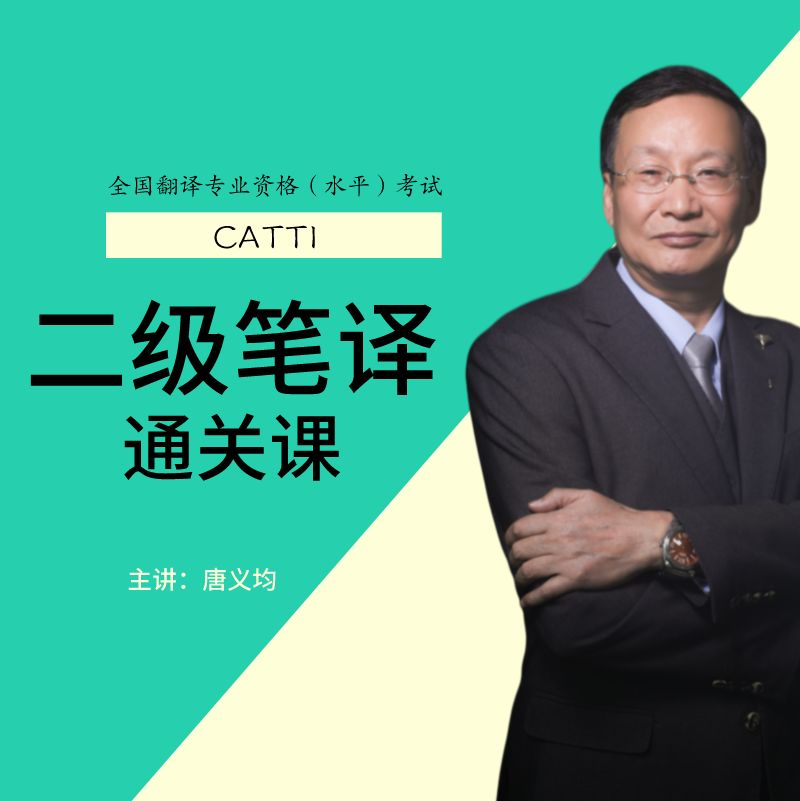
本课程选自韩刚CATTI笔译课程,全程韩刚主讲,186课时
课程购买>>
Beaverton: Oregon’s Most Diverse City
Stroll through the farmers’ market and you will hear a plethora of languages and see a rainbow of faces. Drive down Canyon Road and stop for halal meat or Filipino pork belly at adjacent markets. Along the highway, browse the aisles of a giant Asian supermarket stocking fresh napa cabbage and mizuna or fresh kimchi. Head toward downtown and you’ll see loncheras — taco trucks — on street corners and hear Spanish bandamusic. On the city’s northern edge, you can sample Indian chaat.
Welcome to Beaverton, a Portland suburb that is home to Oregon’s fastest growing immigrant population. Once a rural community, Beaverton, population 87,000, is now the sixth largest city in Oregon — with immigration rates higher than those of Portland, Oregon’s largest city.
Transformation
Best known as the world headquarters for athletic shoe company Nike, Beaverton has changed dramatically over the past 40 years. Settled by immigrants from northern Europe in the 19th century, today it is a place where 80 languages from Albanian to Urdu are spoken in the public schools and about 30 percent of students speak a language besides English, according to English as a Second Language program director Wei Wei Lou.
Beaverton’s wave of new residents began arriving in the 1960s, with Koreans and Tejanos (Texans of Mexican origin), who were the first permanent Latinos. In 1960, Beaverton’s population of Latinos and Asians was less than 0.3 percent. By 2000, Beaverton had proportionately more Asian and Hispanic residents than the Portland metro area. Today, Asians comprise 10 percent and Hispanics 11 percent of Beaverton’s population.Mayor Denny Doyle says that many in Beaverton view the immigrants who are rapidly reshaping Beaverton as a source of enrichment. “Citizens here especially in the arts and culture community think it’s fantastic that we have all these different possibilities here,” he says.
Immigrants in Beaverton
Sig Unander, 58, who grew up in Beaverton and has worked for years in the Spanish-language media in the Portland metro area, notes that most Mexican newcomers to Beaverton seem to have family in the town.” There is a chain migration link with large extended families,” he says. “They go where they have some connection.”
Gloria Vargas, 50, a Salvadoran immigrant, owns a popular small restaurant, Gloria’s Secret Café, in downtown Beaverton. “I love Beaverton,” she says. “I feel like I belong here.” Her mother moved her to Los Angeles as a teenager in 1973, and she moved Oregon in 1979. She landed a coveted vendor spot in the Beaverton Farmers Market in 1999. Now in addition to running her restaurant, she has one of the most popular stalls there, selling up to 200 Salvadoran tamales — wrapped in banana leaves rather than corn husks — each Saturday. “Once they buy my food, they always come back for more,” she says.
“It’s pretty relaxed here,” says Taj Suleyman, 28, born and raised in Lebanon, and recently transplanted to Beaverton to start a job working with immigrants from many countries. Half Middle Eastern and half African, Suleyman says he was attracted to Beaverton specifically because of its diversity. He serves on a city-sponsored Diversity Task Force set up by Mayor Doyle.
Mohammed Haque, originally from Bangladesh, finds Beaverton very welcoming. His daughter, he boasts, was even elected her high school’s homecoming queen.South Asians such as Haque have transformed Bethany, a neighborhood north of Beaverton. It is dense with immigrants from Gujarat, a state in India and primary source for the first wave of Beaverton’s South Asian immigrants.
The first wave of South Asian immigrants to Beaverton, mostly Gujaratis from India, arrived in the 1960s and 1970s, when the motel and hotel industry was booming. Many bought small hotels and originally settled in Portland, and then relocated to Beaverton for better schools and bigger yards. The second wave of South Asians arrived during the high-tech boom of the 1980s, when the software industry, and Intel and Tektronix, really took off.
Many of Beaverton’s Asians converge at Uwajimaya, a 30,000-square-foot supermarket near central Beaverton. Bernie Capell, former special events coordinator at Uwajimaya, says that many come to shop for fresh produce every day. But the biggest group of shoppers at Uwajimaya, she adds, are Caucasians.
Beaverton’s Asian population boasts a sizable number of Koreans, who began to arrive in the late 1960s and early 1970s.
According to Ted Chung, a native of Korea and Beaverton resident since 1978, three things stand out about his fellow Korean immigrants. Upon moving to Beaverton, they join a Christian church — often Methodist or Presbyterian — as a gathering place; they push their children to excel in school; and they shun the spotlight.
Chung says he and his fellow Korean émigrés work hard as small businessmen — owning groceries, dry cleaners, laundromats, delis, and sushi shops — and are frugal so they can send their children to a leading university.Most recently, immigrants from Central and South America, as well as refugees from Iraq and Somalia, have joined the Beaverton community.
Many Helping Hands
Beaverton organizations help immigrants.
The Beaverton Resource Center helps all immigrants with health and literacy services. The Somali Family Education Center helps Somalis and other African refugees to get settled. And one Beaverton elementary school even came up with the idea of a “sew in”— parents of students sewing together — to welcome Somali Bantu parents and bridge major cultural differences.
Historically white churches, such as Beaverton First United Methodist Church, offer immigration ministries. And Beaverton churches of all denominations host Korean- or Spanish-language services.
Beaverton’s Mayor Doyle wants refugee and immigrant leaders to participate in the town’s decision-making. He set up a Diversity Task Force whose mission is “to build inclusive and equitable communities in the City of Beaverton.” The task force is working to create a multicultural community center for Beavertonians of all backgrounds.
The resources and warm welcome that Beaverton gives immigrants are reciprocated in the affection that many express for their new home.
Kaltun Caynan, 40, a Somali woman who came to Beaverton in 2001 fleeing civil war, is an outreach coordinator for the Somali Family Education Center. “I like it so much,” she said, cheerfully. “Nobody discriminate[s against] me, everybody smiling at me.”
Shahriar Ahmad, an engineer from Bangladesh and president of Bilal Mosque, moved to Beaverton in 1985 and cherishes his new country.
“The immigrant community,” he said, “feels a sense of gratitude and appreciation to be away from political oppression, violence, economic difficulties, the harshness of life.”
“We are here, we love this place, I have gotten more from this country than anywhere in the world and there is a distinct bias in my heart for this place.”

 点赞(0)
点赞(0)

 收藏
收藏

2026年度全国翻译专业资格(水平)考试成绩于2026年8月25日公布。境内考点和境外考点的考生,均可登录中国人事考试网进行成绩查询。
人事考试网 2026-08-25 14:35:06
收藏资讯
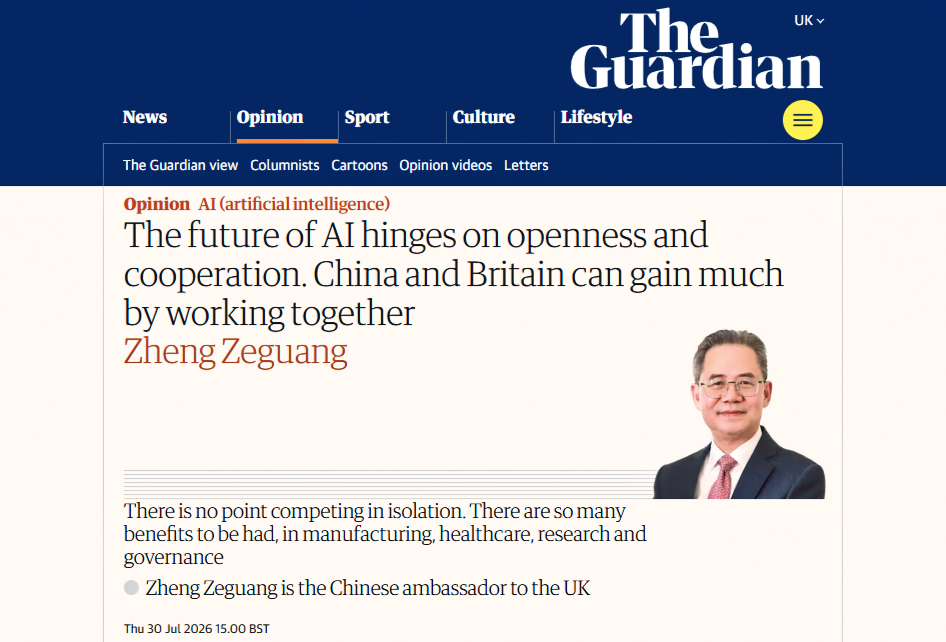
On 30 July 2026, an article by Chinese Ambassador to the UK Zheng Zeguang titled "The future of AI hinges on openness and cooperation. China and Britain can gain much by working together" was published in the British newspaperThe Guardian.
驻英使馆 2026-08-07 10:12:15
收藏资讯
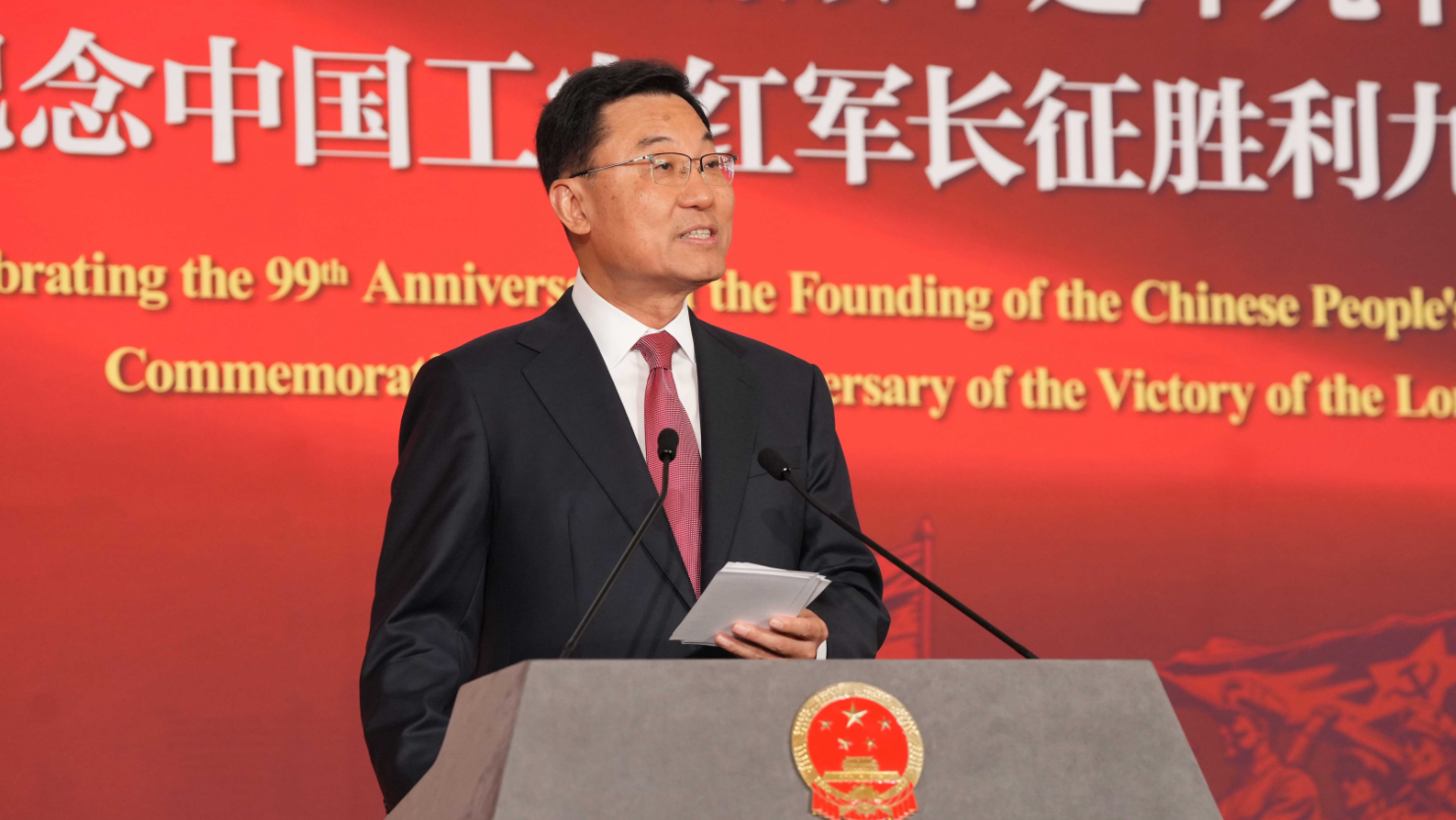
很高兴和大家齐聚一堂,共同庆祝中国人民解放军建军99周年。我谨向中国人民的子弟兵致以节日问候,向长期关心中国国防事业和中美关系发展的各界人士表示衷心感谢!
驻美使馆 2026-08-04 09:49:36
收藏资讯
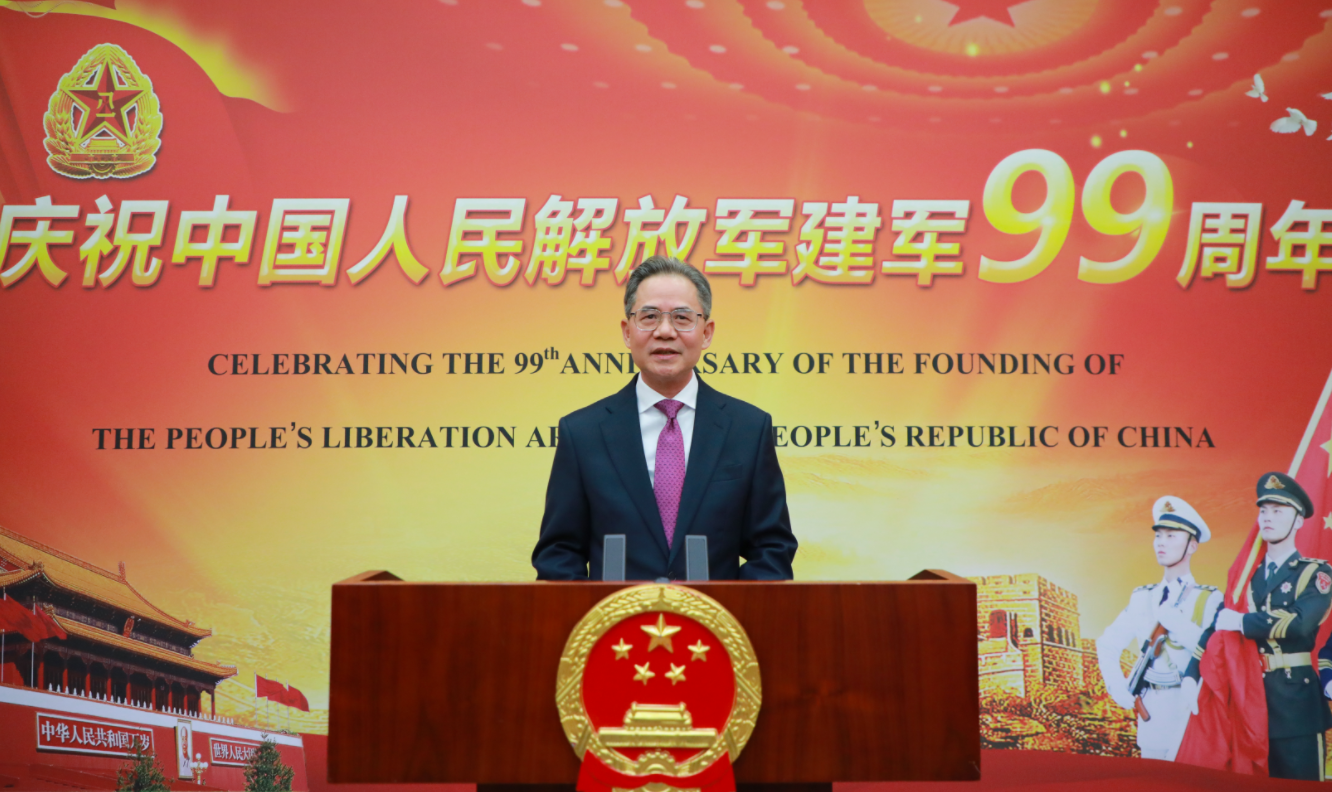
感谢各位出席今晚的招待会,与我们共同庆祝中国人民解放军建军99周年。我谨代表中国驻英国大使馆,对各位嘉宾的到来表示热烈欢迎!借此机会,我要感谢各位长期以来为推动中英关系以及中国同各位所代表国家关系发展作出的努力。
驻英使馆 2026-08-04 09:48:07
收藏资讯

微信公众号

微信小程序
 登录
登录