CATTI-题库-真题-模拟-课程-直播
 天之聪教育
天之聪教育
 2017-11-08
 网络
网络
 9383次
9383次

E-C
来源:http://www.bbc.com/capital/story/20161028-native-english-speakers-are-the-worlds-worst-communicators
It was just one word in one email, but it triggered huge financial losses for a multinational company.
The message, written in English, was sent by a native speaker to a colleague for whom English was a second language. Unsure of the word, the recipient found two contradictory meanings in his dictionary. He acted on the wrong one.
Months later, senior management investigated why the project had flopped, costing hundreds of thousands of dollars. “It all traced back to this one word,” says Chia Suan Chong, a UK-based communications skills and intercultural trainer, who didn't reveal the tricky word because it is highly industry-specific and possibly identifiable. “Things spiralled out of control because both parties were thinking the opposite.”
When such misunderstandings happen, it’s usually the native speakers who are to blame. Ironically, they are worse at delivering their message than people who speak English as a second or third language, according to Chong.
A lot of native speakers are happy that English has become the world’s global language. They feel they don’t have to spend time learning another language,” says Chong.
The non-native speakers, it turns out, speak more purposefully and carefully, typical of someone speaking a second or third language. Anglophones, on the other hand, often talk too fast for others to follow, and use jokes, slang and references specific to their own culture, says Chong.
“The native English speaker… is the only one who might not feel the need to accommodate or adapt to the others,” she adds.
With non-native English speakers in the majority worldwide, it’s Anglophones who may need to up their game.
“Native speakers are at a disadvantage when you are in a lingua franca situation,” where English is being used as a common denominator, says Jennifer Jenkins, professor of global Englishes at the UK’s University of Southampton. “It’s the native English speakers that are having difficulty understanding and making themselves understood.”
Non-native speakers generally use more limited vocabulary and simpler expressions, without flowery language or slang. And then there’s cultural style, Blattner says. When a Brit reacts to a proposal by saying, “That’s interesting” a fellow Brit might recognise this as understatement for, “That’s rubbish.” But other nationalities would take the word “interesting” on face value, he says.
“English speakers with no other language often have a lack of awareness of how to speak English internationally.”
In Berlin, Coulter saw German staff of a Fortune 500 company being briefed from their Californian HQ via video link. Despite being competent in English, the Germans gleaned only the gist of what their American project leader said. So among themselves they came up with an agreed version, which might or might not have been what was intended by the California staff.
“Too many non-Anglophones, especially the Asians and the French, are too concerned about not ‘losing face’ — and nod approvingly while not getting the message at all,” he says.
That’s why Nerriere devised Globish — a distilled form of English, stripped down to 1,500 words and simple but standard grammar. “It’s not a language, it’s a tool,” he says. Since launching Globish in 2004 he’s sold more than 200,000 Globish text books in 18 languages.
“If you can communicate efficiently with limited, simple language you save time, avoid misinterpretation and you don’t have errors in communication,” Nerriere says.
When trying to communicate in English with a group of people with varying levels of fluency, it’s important to be receptive and adaptable, tuning your ears into a whole range of different ways of using English, Jenkins says.
“People who’ve learned other languages are good at doing that, but native speakers of English generally are monolingual and not very good at tuning in to language variation,” she says.
In meetings, Anglophones tend to speed along at what they consider a normal pace, and also rush to fill gaps in conversation, according to Steggles.
He recommends making the same point in a couple of different ways and asking for some acknowledgement, reaction or action.
C-E
气候变化已不是单纯的环境保护问题,而成为人类生存与发展问题。中国需要改变以煤为主的能源结构和高污染、高能耗的产业结构,以治理环境和应对全球气候变化。同时,积极应对气候变化也是中国参与全球治理的责任,也是实现可持续发展的迫切需要。中国作为世界最大的发展中国家,需要积极推动经济与能源的转型,以推动全球可持续发展。
长期以来,中国高度重视气候变化问题,把积极应对气候变化作为国家经济社会发展的重大战略,把绿色低碳发展作为生态文明建设的重要内容,采取了一系列行动,为应对全球气候变化做出了重要贡献。
到2020年单位国内生产总值二氧化碳排放比2005年下降40%-45%,非化石能源占一次能源消费总量的比重达到15% , 森林面积比2005年增加4000万公顷,森林蓄积量2005年增加13亿立方米。
中国还将在农业、林业、水资源等重点领域和城市、沿海、生态脆弱地区形成有效抵御气候变化风险的机制,提高抵抗能力。

 点赞(0)
点赞(0)

 收藏
收藏
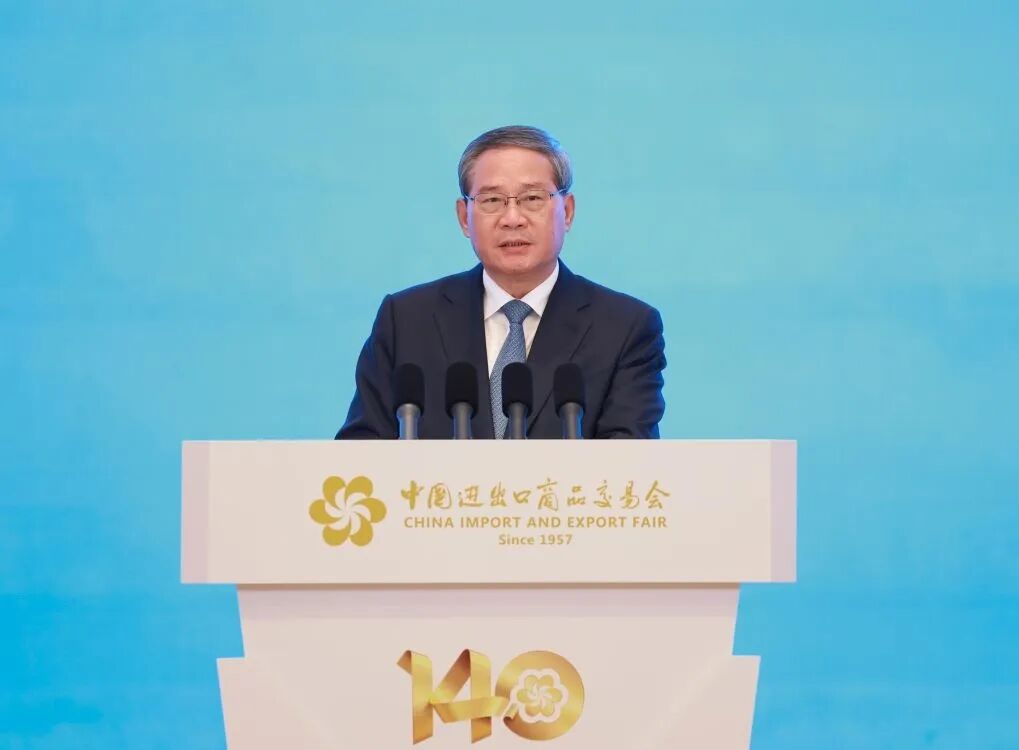
很高兴同大家相聚在美丽的花城广州,共同出席第140届中国进出口商品交易会。我谨代表中国政府,对各位的到来表示热烈欢迎!对大家长期以来为促进中外经贸合作和发展所作出的积极贡献表示衷心感谢!
新华网 2026-10-16 09:24:52
收藏资讯
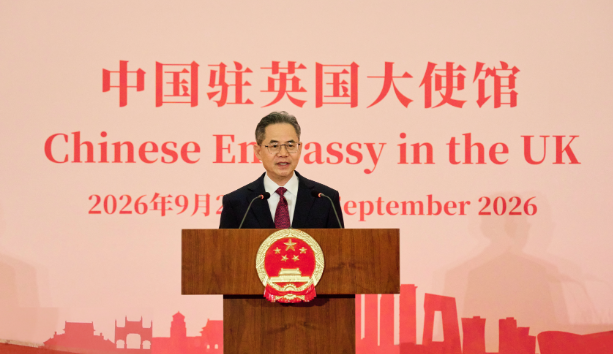
Tonight, we are gathered here to celebrate the 77th anniversary of the founding of the People’s Republic of China. On behalf of the Chinese Embassy in the UK, I would like to extend a warm welcome to all of you and my most sincere thanks for your long-sta
驻英使馆 2026-10-08 10:06:45
收藏资讯
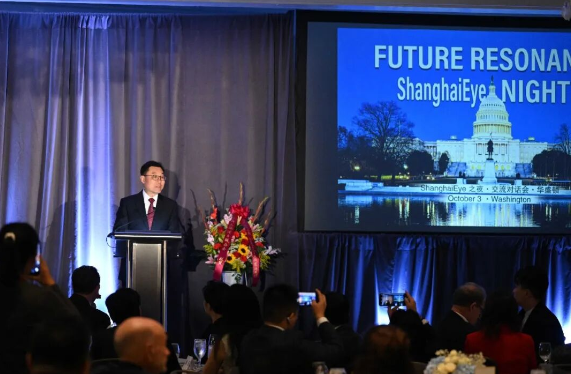
It gives me great delight to join you at the "Future Resonance — ShanghaiEye Night" China-U.S. people-to-people exchange events, which are also part of the "Shanghai Let's Meet" city promotion initiative.
驻美使馆 2026-10-08 09:48:03
收藏资讯
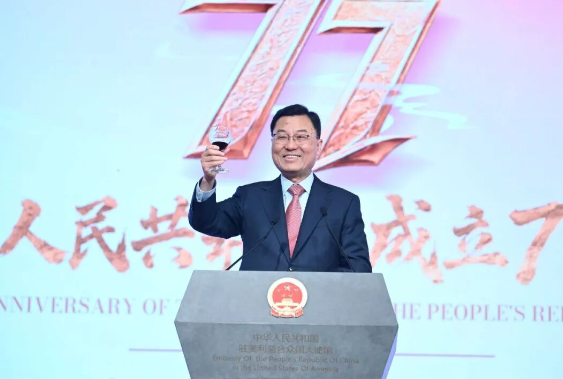
I am delighted to welcome you to our reception celebrating the 77th anniversary of the founding of the People’s Republic of China. Let me extend a warm welcome to you all and express my heartfelt thanks to friends from all walks of life who have long supp
驻美使馆 2026-10-08 09:46:22
收藏资讯

微信公众号

微信小程序
 登录
登录