CATTI-题库-真题-模拟-课程-直播
 国新办&中国网
 2026-04-21

 231次
231次

国务院新闻办新闻局副局长、新闻发言人贾惠丽:
Jia Huili:
女士们、先生们,大家上午好!欢迎出席国务院新闻办新闻发布会。今天我们进行经济数据例行发布,我们邀请到国家统计局新闻发言人、总经济师、国民经济综合统计司司长付凌晖先生,请他为大家介绍2026年1-2月份国民经济运行情况,并回答大家关心的问题。
Ladies and gentlemen, good morning. Welcome to this press conference held by the State Council Information Office (SCIO). This is a regular briefing on China's economic data. Today, we are joined by Mr. Fu Linghui, spokesperson and chief economist of the National Bureau of Statistics (NBS) and director general of its Department of Comprehensive Statistics. Mr. Fu will brief you on China's economic performance in the first two months of 2026 and then take your questions.
下面请付凌晖先生作介绍。
Now, I would like to give the floor to Mr. Fu for his introduction.
国家统计局新闻发言人、总经济师、国民经济综合统计司司长付凌晖:
Fu Linghui:
谢谢主持人。各位媒体朋友,大家上午好!首先我通报一下1—2月份主要经济指标情况,然后回答大家关心的问题。
Thank you, Ms. Jia. Good morning, everyone. I will start by briefing you on the main economic indicators for the first two months of 2026 and then take your questions.
1—2月份国民经济起步有力、开局良好
In January-February, the national economy got off to a robust and promising start.
1—2月份,在以习近平同志为核心的党中央坚强领导下,各地区各部门认真落实党中央、国务院决策部署,坚持稳中求进工作总基调,实施更加积极有为的宏观政策,加大逆周期和跨周期调节,持续扩大内需、优化供给,做优增量、盘活存量,生产供给增长加快,市场需求稳中有升,就业物价总体稳定,新质生产力成长壮大,经济运行起步有力,实现良好开局。
In the first two months, under the strong leadership of the Central Committee of the Communist Party of China (CPC) with Comrade Xi Jinping at its core, all regions and departments conscientiously implemented the decisions and arrangements made by the CPC Central Committee and the State Council, adhered to the general principle of pursuing progress while ensuring stability, implemented more proactive and effective macro policies, and stepped up counter- and cross-cyclical adjustments. All regions and departments further boosted domestic demand, improved supply and optimized the allocation of new resources while making the best use of existing ones. As a result, production and supply accelerated, market demand maintained a steady growth, employment and prices were generally stable, and new quality productive forces developed and thrived. The national economy got off to a robust and promising start.
一、工业生产加快,装备制造业和高技术制造业增势较好
First, industrial production accelerated and equipment manufacturing and high-tech manufacturing showed good growth momentum.
1—2月份,全国规模以上工业增加值同比增长6.3%,比上年12月份加快1.1个百分点。分三大门类看,采矿业增加值同比增长6.1%,制造业增长6.6%,电力、热力、燃气及水生产和供应业增长4.7%。装备制造业增加值同比增长9.3%,高技术制造业增加值增长13.1%,分别快于全部规模以上工业增加值3.0和6.8个百分点。分经济类型看,国有控股企业增加值同比增长4.2%;股份制企业增长6.9%,外商及港澳台投资企业增长4.0%;私营企业增长7.4%。分产品看,3D打印设备、锂离子电池、工业机器人产品产量同比分别增长54.1%、42.6%、31.1%。从环比看,2月份规模以上工业增加值比上月增长0.83%。2月份,制造业采购经理指数为49.0%;企业生产经营活动预期指数为53.2%,比上月上升0.6个百分点。
In the first two months, the total value added of industrial enterprises above designated size grew by 6.3% year on year, 1.1 percentage points faster than that in December. In terms of sectors, the value added of mining went up by 6.1% year on year, manufacturing up by 6.6%, and the production and supply of electricity, thermal power, gas and water up by 4.7%. The value added of equipment manufacturing increased by 9.3% year on year, and that of high-tech manufacturing rose by 13.1%, which were 3 percentage points and 6.8 percentage points faster than that of industrial enterprises above designated size, respectively. In terms of ownership, the value added of state-holding enterprises increased by 4.2% year on year; that of share-holding enterprises was up by 6.9%; that of enterprises funded by foreign investors or investors from Hong Kong, Macao and Taiwan was up by 4%; and that of private enterprises was up by 7.4%. In terms of products, the output of 3D printing devices, lithium-ion batteries and industrial robots grew by 54.1%, 42.6% and 31.1% year on year, respectively. In February, the total value added of industrial enterprises above designated size went up by 0.83% month on month. In February, the Manufacturing Purchasing Managers' Index stood at 49%, and the Production and Operation Expectation Index was 53.2%, 0.6 percentage point higher than that of the previous month.
二、服务业较快增长,现代服务业快速发展
Second, the service sector grew rapidly and modern services developed quickly.
1—2月份,全国服务业生产指数同比增长5.2%,比上年12月份加快0.2个百分点。分行业看,信息传输、软件和信息技术服务业,租赁和商务服务业,金融业,交通运输、仓储和邮政业,住宿和餐饮业生产指数分别增长10.1%、8.2%、7.0%、6.3%、5.4%。2月份,服务业商务活动指数为49.7%,比上月上升0.2个百分点;服务业业务活动预期指数为55.8%。其中,住宿、餐饮、文化体育娱乐等行业商务活动指数位于60.0%以上高位景气区间。
In the first two months, the Index of Services Production grew by 5.2% year on year, 0.2 percentage point faster than that in December. Specifically, the production index of information transmission, software and information technology services, leasing and business services, finance, transportation, storage and postal services, and hotels and catering services grew by 10.1%, 8.2%, 7%, 6.3% and 5.4%, respectively. In February, the Business Activity Index for Services was 49.7%, 0.2 percentage point higher than that of the previous month, and the Business Activity Expectation Index for Services was 55.8%. Specifically, the Business Activity Index for hotels, catering, and culture, sports and entertainment stayed within the high expansion range of 60% and above.
三、市场销售增速回升,服务零售增长较快
Third, growth of market sales picked up and service retails grew quickly.
1—2月份,社会消费品零售总额86079亿元,同比增长2.8%,比上年12月份加快1.9个百分点。按经营单位所在地分,城镇消费品零售额74449亿元,增长2.7%;乡村消费品零售额11630亿元,增长3.2%。按消费类型分,商品零售额75815亿元,增长2.5%;餐饮收入10264亿元,增长4.8%。基本生活类和部分升级类商品销售增长较快。限额以上单位服装鞋帽针纺织品类、粮油食品类、通讯器材类、金银珠宝类商品零售额同比分别增长10.4%、10.2%、17.8%、13.0%。从环比看,2月份社会消费品零售总额比上月增长0.81%。1—2月份,服务零售额同比增长5.6%,比上年全年加快0.1个百分点。其中,通讯信息服务类、旅游咨询租赁服务类、文体休闲服务类零售额较快增长。1—2月份,全国网上商品和服务零售额32546亿元,同比增长9.2%。其中,网上商品零售额20812亿元,增长10.3%,占社会消费品零售总额的比重为24.2%;网上服务零售额11734亿元,增长7.3%。
In the first two months, the total retail sales of consumer goods reached 8,607.9 billion yuan ($1,249.6 billion), up by 2.8% year on year, 1.9 percentage points faster than that in December. Analyzed by different areas, retail sales of consumer goods in urban areas reached 7,444.9 billion yuan, up by 2.7%; and that in rural areas reached 1,163 billion yuan, up by 3.2%. Grouped by consumption patterns, retail sales of goods were 7,581.5 billion yuan, up by 2.5%; and the income of catering was 1,026.4 billion yuan, up by 4.8%. Sales of basic living goods and certain upgraded goods grew quickly. The retail sales of clothes, shoes, hats and textiles, of grain, oil and food, of communication equipment, and of gold, silver and jewelry by enterprises above designated size increased by 10.4%, 10.2%, 17.8% and 13% year on year, respectively. In February, total retail sales of consumer goods increased by 0.81% month on month. In the first two months, retail sales of services went up by 5.6% year on year, 0.1 percentage point faster than that of last year. Specifically, that of communication information services, tourism consultation and rental services, and cultural, sports and leisure services grew quickly. In the first two months, the online retail sales of goods and services reached 3,254.6 billion yuan, up by 9.2% year on year. Specifically, the online retail sales of goods were 2,081.2 billion yuan, up by 10.3%, accounting for 24.2% of the total retail sales of consumer goods. The online retail sales of services totaled 1,173.4 billion yuan, up by 7.3%.
四、固定资产投资由降转增,基础设施投资增长较快
Fourth, fixed-asset investment shifted from decline to growth and infrastructure investment grew relatively rapidly.
1—2月份,全国固定资产投资(不含农户)52721亿元,同比增长1.8%,上年全年为下降3.8%;扣除房地产开发投资,全国固定资产投资增长5.2%。分领域看,基础设施投资同比增长11.4%,制造业投资增长3.1%,房地产开发投资下降11.1%。全国新建商品房销售面积9293万平方米,同比下降13.5%;新建商品房销售额8186亿元,下降20.2%。分产业看,第一产业投资同比增长17.4%,第二产业投资增长5.4%,第三产业投资下降0.4%。民间投资同比下降2.6%,降幅比上年全年收窄3.8个百分点;扣除房地产开发投资,民间投资增长1.0%。高技术产业投资同比增长5.1%,其中航空、航天器及设备制造业,研发与设计服务业,信息服务业投资分别增长20.2%、20.6%、16.5%。从环比看,2月份固定资产投资(不含农户)比上月增长0.39%。
In the first two months, the national investment in fixed assets (excluding rural households) reached 5.2721 trillion yuan, up by 1.8% year on year. It dropped by 3.8% in 2025. Investment in fixed assets was up by 5.2% with the investment in real estate development deducted. Specifically, investment in infrastructure grew by 11.4% year on year, that in manufacturing grew by 3.1%, and that in real estate development declined by 11.1%. The floor space of new commercial buildings sold was 92.93 million square meters, down by 13.5% year on year; and the total sales of new commercial buildings were 818.6 billion yuan, down by 20.2%. By industry, investment in the primary industry went up by 17.4% year on year, that in the secondary industry was up by 5.4%, and that in the tertiary industry was down by 0.4%. Private investment decreased by 2.6% year on year, with the decline narrowing by 3.8 percentage points compared with the whole of last year. Excluding real estate development investment, private investment grew by 1.0%. Investment in high-tech industries increased by 5.1% year on year, among which investment in the manufacture of aircraft, spacecraft and related equipment, R&D and design services sector, and information services sector increased by 20.2%, 20.6% and 16.5%, respectively. In February, fixed-asset investment (excluding rural households) increased by 0.39% month on month.
五、货物进出口快速增长,贸易结构继续优化
Fifth, imports and exports of goods grew quickly and the trade structure continued to be optimized.
1—2月份,货物进出口总额77321亿元,同比增长18.3%,比上年12月份加快13.4个百分点。其中,出口46178亿元,增长19.2%;进口31143亿元,增长17.1%。一般贸易进出口同比增长13.5%。对共建“一带一路”国家进出口增长20.0%。民营企业进出口增长22.8%。机电产品出口增长24.3%。
From January to February, the total imports and exports of goods was 7.7321 trillion yuan, an increase of 18.3% year on year, accelerating by 13.4 percentage points compared with December. The total value of exports was 4.6178 trillion yuan, up by 19.2%; and the total value of imports was 3.1143 trillion yuan, up by 17.1%. General trade imports and exports increased by 13.5% year on year. Imports and exports with Belt and Road partner countries grew by 20.0%. Imports and exports by private enterprises increased by 22.8%. Exports of mechanical and electrical products increased by 24.3%.
六、就业形势总体稳定,城镇调查失业率同比持平
Sixth, employment was generally stable and the surveyed urban unemployment rate was unchanged year on year.
1—2月份,全国城镇调查失业率平均值为5.3%,与上年同期持平。2月份,全国城镇调查失业率为5.3%,比上月上升0.1个百分点。本地户籍劳动力调查失业率为5.4%;外来户籍劳动力调查失业率为5.0%,其中外来农业户籍劳动力调查失业率为5.2%。31个大城市城镇调查失业率为5.1%。全国企业就业人员周平均工作时间为48.1小时。
In the first two months, the average surveyed urban unemployment rate nationwide was 5.3%, unchanged from the same period last year. In February, the national surveyed urban unemployment rate was 5.3%, 0.1 percentage point higher than that of the previous month. The surveyed unemployment rate of population with local household registration was 5.4%; and that of population with non-local household registration was 5.0%, among which, the rate of the population with non-local agricultural household registration was 5.2%. The surveyed urban unemployment rate in 31 major cities was 5.1%. Employees of enterprises worked an average of 48.1 hours per week.
七、居民消费价格涨幅扩大,工业生产者价格降幅收窄
Seventh, the growth of consumer prices increased and the decline of producer prices for industrial products narrowed.
1—2月份,全国居民消费价格(CPI)同比上涨0.8%,其中1月份上涨0.2%,2月份上涨1.3%。分类别看,1—2月份,食品烟酒及在外餐饮价格同比上涨0.6%,衣着价格上涨1.9%,居住价格下降0.1%,生活用品及服务价格上涨2.7%,交通通信价格下降2.1%,教育文化娱乐价格上涨1.0%,医疗保健价格上涨1.8%,其他用品及服务价格上涨14.3%。在食品烟酒及在外餐饮价格中,猪肉价格下降11.2%,粮食价格下降0.2%,鲜果价格上涨4.5%,鲜菜价格上涨8.8%。扣除食品和能源价格后的核心CPI同比上涨1.3%。从环比看,1月份,全国居民消费价格上涨0.2%,2月份上涨1.0%。
From January to February, the national Consumer Price Index (CPI) increased by 0.8% year on year, rising by 0.2% in January and 1.3% in February. Grouped by commodity categories, in the first two months, prices for food, tobacco, alcohol, and catering services were up by 0.6% year on year; clothing up by 1.9%; housing down by 0.1%; articles and services for daily use up by 2.7%; transportation and communication down by 2.1%; education, culture and recreation up by 1.0%; medical services and health care up by 1.8%; and other articles and services up by 14.3%. Within the category of food, tobacco, alcohol and catering services, prices for pork went down by 11.2%, grain down by 0.2%, fresh fruits up by 4.5%, and fresh vegetables up by 8.8%. The core CPI, excluding the prices of food and energy, went up by 1.3% year on year. From a month-on-month perspective, the national CPI rose by 0.2% in January, and by 1.0% in February.
1—2月份,全国工业生产者出厂价格同比下降1.2%。分月看,1月份同比下降1.4%,环比上涨0.4%;2月份同比下降0.9%,环比上涨0.4%。1—2月份,全国工业生产者购进价格同比下降1.1%。
From January to February, the national Producer Price Index (PPI) for industrial products fell by 1.2% year on year. On a monthly basis, January decreased by 1.4% year on year and rose by 0.4% month on month, and February decreased by 0.9% year on year and rose by 0.4% month on month. From January to February, the purchasing prices for industrial producers nationwide fell by 1.1% year on year.
总的来看,1—2月份,主要经济指标明显回升,国民经济开局良好。但也要看到,外部环境变化影响加深,地缘政治风险持续上升,国内经济发展和转型中面临的老问题、新挑战仍然不少,一些企业经营困难。下阶段,要坚持以习近平新时代中国特色社会主义思想为指导,深入贯彻党的二十大和二十届历次全会精神,认真落实中央经济工作会议和全国两会部署,完整准确全面贯彻新发展理念,加快构建新发展格局,着力推动高质量发展,坚持稳中求进工作总基调,实施更加积极有为的宏观政策,因地制宜发展新质生产力,着力稳就业、稳企业、稳市场、稳预期,推动经济实现质的有效提升和量的合理增长。谢谢!
Overall, from January to February, major economic indicators rebounded significantly and the national economy got off to a good start. However, it should also be noted that the impact of changes in the external environment has deepened, geopolitical risks continue to increase, and there remain old problems and new challenges in domestic economic development and transformation, with some enterprises experiencing difficulties in operation. In the next stage, we must adhere to Xi Jinping Thought on Socialism with Chinese Characteristics for a New Era as our guide, thoroughly implement the guiding principles of the 20th CPC National Congress and the plenary sessions of the 20th CPC Central Committee, and earnestly carry out the decisions and arrangements of the Central Conference on Economic Work and the national "two sessions." We will fully, accurately and comprehensively apply the new development philosophy, accelerate the building of a new development pattern, and focus on promoting high-quality development. We will uphold the general principle of pursuing progress while ensuring stability, implement a more proactive and effective macro policy, and develop new quality productive forces based on local conditions. We will focus on stabilizing employment, enterprises, markets and expectations, and promote effective qualitative improvement and reasonable quantitative growth of the economy. Thank you.
贾惠丽:
Jia Huili:
感谢付凌晖先生的介绍。现在请大家提问,提问前请先通报所在的新闻机构。
Thank you, Mr. Fu. The floor is now open for questions. Please identify the news outlet you represent before asking your questions.
第一财经记者:
Yicai:
2026年是“十五五”的开局之年,1—2月也是全年的风向标,请问您如何评价这两个月我国经济运行的表现,有哪些亮点和积极的变化?谢谢。
The year 2026 is the first year of the 15th Five-Year Plan period, and January-February is also a barometer for the whole year. How would you evaluate the performance of China's economic operation in these two months? What are the main highlights and positive changes? Thank you.
付凌晖:
Fu Linghui:
谢谢您的提问。今年是“十五五”开局之年,各方面都很关注1—2月份经济运行情况。总的来看,今年以来,尽管国际环境跌宕起伏,外部风险特别是地缘政治冲突外溢风险上升,但在党中央的坚强领导下,各地区各部门认真实施更加积极有为的宏观政策,着力发挥存量政策和增量政策的集成效应,1—2月份生产供给较快增长,国内需求稳步扩大,就业物价总体稳定,新质生产力培育壮大,对1—2月份的运行用一句话来评价,就是起步有力、开局良好。有以下几个方面的特点:
Thank you for your questions. This year marks the first year of the 15th Five-Year Plan period, and China's economic performance in January and February has drawn widespread attention. Since the beginning of this year, the international environment has been volatile with rising external risks, especially the spillover risks of geopolitical conflicts. Even so, under the strong leadership of the CPC Central Committee, all regions and departments have earnestly implemented more proactive and effective macroeconomic policies, focusing on maximizing the integrated effect of existing and new policies. In the January-February period, production and supply grew rapidly, domestic demand expanded steadily, employment and prices remained generally stable, and new quality productive forces were fostered and strengthened. Put simply, the economy got off to a strong start in the January-February period. The characteristics were as follows:
一是生产较快增长。从工业看,1—2月份规模以上工业增加值同比增长6.3%,增速比上年12月份加快1.1个百分点,这个增长主要是来自国内需求的改善、出口拉动的增强和宏观政策效应的显现。工业中,装备制造业增长对整个工业增长贡献尤为突出,1—2月份装备制造业增加值增长9.3%,对整个规模以上工业增长的贡献率达到47.4%,拉动非常明显。从服务业看,在春节因素的影响,以及促消费相关政策显效共同作用下,服务业实现较快增长。1—2月份,服务业生产指数同比增长5.2%,增速比去年12月份加快0.2个百分点。人工智能发展对于信息服务需求的拉动比较明显,1—2月份信息传输、软件和信息技术服务业生产指数同比增长10.1%,这两年信息技术行业一直保持高速增长。同时,在春节因素的带动下,今年1—2月份交通运输、住宿餐饮等行业生产指数增速比去年12月份明显回升。
First, production grew at a relatively rapid pace. In the industrial sector, the total value added of industrial enterprises above designated size increased 6.3% year on year in the first two months, 1.1 percentage points faster than in December. This growth was mainly driven by improved domestic demand, stronger export momentum and the continued effect of macroeconomic policies. Within the sector, equipment manufacturing made a particularly notable contribution to overall industrial growth. Its value added rose 9.3% year on year, accounting for 47.4% of total growth among industrial enterprises above designated size. In the service sector, growth accelerated due to the combined effects of the Spring Festival and consumption-promoting policies. In the first two months, the Index of Services Production grew 5.2% year on year, 0.2 percentage point faster than in December. The development of artificial intelligence also notably boosted demand for information services. In the first two months, the production index of information transmission, software and IT services increased 10.1% year on year, continuing the rapid growth the sector has sustained in recent years. Meanwhile, boosted by the Spring Festival, the production index for transportation, accommodation and catering services rebounded notably in January-February from December.
二是国内需求扩大。从消费看,今年以来,春节超长假期的带动作用明显,消费品以旧换新的政策持续显效,文化旅游、休闲娱乐市场活动比较活跃,服务消费增长较快,市场销售明显回升。1—2月份社会消费品零售总额同比增长2.8%,增速比去年12月份加快1.9个百分点,主要反映商品的销售情况;服务零售额增长5.6%,明显快于商品零售增速。从投资看,作为“十五五”开局之年,各方面抢抓机遇,加大重大工程开工建设,带动投资回升。1—2月份固定资产投资同比增长1.8%,而去年全年固定资产投资下降3.8%,实现由降转增的变化。在固定资产投资中,基础设施投资增速明显加快,今年1—2月份同比增Second, domestic demand expanded. In terms of consumption, the extended Spring Festival holiday provided a strong boost to start the year, while consumer goods trade-in programs continued to take effect. Cultural tourism, leisure and entertainment activities remained lively, service spending grew rapidly, and overall market sales posted a clear rebound. In the first two months, total retail sales of consumer goods increased 2.8% year on year, 1.9 percentage points faster than in December — a figure that primarily covers goods transactions. Retail sales of services increased 5.6%, significantly outpacing those of goods. In terms of investment, with 2026 marking the first year of the 15th Five-Year Plan period, efforts were made across the board to seize opportunities and accelerate the launch and construction of major projects, driving a rebound in investment. In the first two months, investment in fixed assets increased 1.8% year on year, while that of the previous year was down 3.8%, thus reversing the downward trend. Specifically, investment in infrastructure grew 11.4% year on year, well above the full-year growth rate of 2025.
三是外贸增势良好。在全球需求边际改善、世界上新兴产业发展进入上升期、我国优势产品竞争力增强,在这些优势共同作用下,今年1—2月份外贸进出口实现了高速增长。1—2月份货物进出口额同比增长18.3%,比去年全年大幅加快。从主要贸易伙伴看,我国对东盟、欧盟、共建“一带一路”国家等进出口增速都保持在20%左右。进出口快速增长,体现出我国外贸较强韧性和发展活力。
Third, foreign trade maintained strong growth. In the first two months, foreign trade grew rapidly on the combined strength of improving global demand, the rise of emerging industries worldwide, and the growing competitiveness of China's advantageous products. In the first two months, the total value of imports and exports of goods increased 18.3% year on year, accelerating sharply compared with overall growth in 2025. Looking at major trading partners, imports and exports with ASEAN, the EU and Belt and Road partner countries all grew at around 20%. The rapid growth of imports and exports reflects the strong resilience and vitality of China's foreign trade.
四是就业物价总体稳定。从就业看,受春节因素影响,1、2月份,全国城镇调查失业率比去年12月份有所上升,但1—2月份调查失业率平均为5.3%,和去年同期比是持平的,表明我国就业稳定态势没有改变。从重点群体看,今年农村外出务工劳动力节后返岗情况总体平稳,就业保持稳定。从价格情况看,随着市场需求回升,加上春节因素带动,今年1—2月份居民消费价格出现了温和回升态势。1—2月份,我国居民消费价格同比上涨0.8%,涨幅和去年12月份持平,但比去年四季度和去年全年都是回升的;扣除食品和能源,我们知道,食品和能源对于价格波动影响比较大,1—2月份扣除食品和能源的核心CPI同比上涨1.3%,涨幅比去年12月份回升。从这些情况看,价格形势出现了积极变化。
Fourth, employment and prices remained generally stable. In terms of employment, affected by Spring Festival dynamics, the national urban surveyed unemployment rate rose slightly in January and February compared with last December. However, the average rate for the first two months held steady at 5.3%, unchanged from the same period last year, indicating that the stable employment situation in China has not changed. Among key groups, rural migrant workers returned to their jobs after the Spring Festival holiday in a steady manner, keeping employment stable. In terms of prices, the CPI recovered moderately in the first two months, buoyed by recovering market demand and the boost from the Spring Festival. In January-February, China's CPI rose 0.8% year on year, the same as last December, but higher than in the fourth quarter and the whole of 2025. Excluding food and energy, categories known for their outsized influence on price swings, core CPI rose 1.3% year on year in January-February, also picking up from December. These trends indicate a positive momentum in price.
五是新动能加快成长。1—2月份经济运行开局良好,离不开新质生产力的培育和新动能的成长壮大。科技创新和产业创新深度融合、“人工智能+”加快拓展,数字经济发展向好,带动产业链上下游同步改善。我们观察到,今年1—2月份,计算机、通信和其他电子设备制造业增加值同比增长14.2%。电子行业快速增长带动了上游相关原材料行业特别是化工行业的增长,1—2月份,化学原料和化学制品制造业增加值同比增长7.6%,也是保持了较快增长。同时,随着人工智能的发展、算力需求的增加,对上游能源行业的拉动作用也是比较明显的。1—2月份,电力、热力生产和供应业增加值同比增长5.1%,比上年12月份加快4个百分点,新动能对整个上下游行业的带动增强。还要看到,随着绿色转型推进,新能源装备生产大幅加快,很多新能源装备产品增速都保持高速增长,这些都为经济增长注入了新动力。
Fifth, new growth drivers developed at an accelerated pace. The sound economic performance in the first two months was inseparable from the cultivation of new quality productive forces and the growth and strengthening of new growth drivers. The deep integration of sci-tech and industrial innovation, the accelerated expansion of the "AI plus" initiative, and the sound development of the digital economy all contributed to improvements across the industrial chain. In the first two months, the value added of computer, communication and other electronic equipment manufacturing increased 14.2% year on year. The rapid growth of the electronics industry also drove growth in upstream raw material sectors, especially the chemical industry. In the first two months, the value added of chemical raw materials and chemical products manufacturing increased 7.6% year on year, sustaining relatively fast growth. At the same time, the development of AI and the rising demand for computing power significantly boosted upstream energy industries. In the first two months, the value added of electricity and heat production and supply industries increased 5.1% year on year, 4 percentage points faster than last December. New growth drivers played an even stronger enabling role along the industrial chain. It should also be noted that, as the green transition advances, the manufacturing of new energy equipment has accelerated significantly, with many such products maintaining rapid growth. All these factors have injected new momentum into economic growth.
总的来看,1—2月份我国经济起步有力,向新向好发展。但也看到,当前外部环境变数较多,地缘政治冲突风险上升,外溢影响不确定性较大,国内还面临着供强需弱的矛盾,一些企业经营比较困难。下阶段,要全面贯彻落实中央经济工作会议和全国两会部署,实施更加积极有为的宏观政策,持续扩大内需、优化供给,因地制宜发展新质生产力,纵深推进全国统一大市场建设,推动经济持续健康发展,更好保障和改善民生。谢谢!
Overall, China's economy got off to a strong start in the January-February period and continued to move toward new growth drivers and improved performance. At the same time, we are aware that the external environment remains complex, with rising risks from geopolitical conflicts and increasing uncertainty in their spillover effects. Domestically, the mismatch between strong supply and relatively weak demand persists, and some enterprises are facing operational difficulties. Looking ahead, we will fully implement the decisions and arrangements made at the Central Conference on Economic Work and the annual sessions of the National People's Congress and the Chinese People's Political Consultative Conference. We will carry out more proactive and effective macroeconomic policies, continue to expand domestic demand and optimize supply, and develop new quality productive forces based on local conditions. We will also further advance the construction of a national unified market, thereby promoting sustained and sound economic growth and better ensuring and improving people's well-being. Thank you.
凤凰卫视记者:
Phoenix TV:
我们关注到,2月份的PPI降幅持续收窄,同时国际油价还在大幅波动,导致航运和保险费用价格都在上涨。请问,如何看待这种输入性通胀压力对下一步PPI以及工业领域价格走势的影响?谢谢。
We have noted that the decline in PPI continued to narrow in February. Meanwhile, international oil prices have fluctuated significantly, pushing up shipping and insurance costs. How do you assess the impact of such imported inflationary pressure on future PPI trends and industrial prices? Thank you.
付凌晖:
Fu Linghui:
谢谢您的提问。确实,近期地缘政治冲突风险上升,导致国际油价发生了比较剧烈的波动,引起大家对市场价格走势的担忧。今年以来,工业生产价格整体上呈现同比降幅收窄的态势,2月份PPI同比下降0.9%,降幅比上月收窄0.5个百分点,同比降幅连续3个月收窄。从环比看,工业生产者出厂价格已经连续5个月环比呈现上涨的态势。工业生产者出厂价格的改善,主要是由于国内部分行业需求扩大、新动能成长对工业品价格的带动,以及部分国际大宗商品价格上涨,这些因素共同推动的结果。在刚才1—2月份经济运行情况中,我也谈到了新动能对于经济发展的支撑作用,从价格领域也能观察到。
Thank you for your question. Indeed, rising geopolitical risks have led to sharp fluctuations in international oil prices, raising concerns about market price trends. Since the beginning of this year, producer prices have generally shown a narrowing year-on-year decline. In February, the PPI fell 0.9% year on year, with the rate of decline easing by 0.5 percentage point from the previous month, marking the third consecutive month of narrowing. On a month-on-month basis, producer prices have risen for five consecutive months. The improvement in producer prices is mainly driven by expanding demand in certain domestic industries, the boost to industrial product prices from the growth of new drivers, and rising international commodity prices. These factors have jointly contributed to the recovery. As I noted earlier when introducing the economic performance for January and February, new growth drivers have played a supportive role in economic development, and this is also reflected in price trends.
从2月份看,PPI降幅收窄主要影响因素有以下几个方面:一是产业升级带动下高端装备需求扩大,带动相关产品价格上涨。2月份航空器制造价格同比上涨7.7%,这和国内商业航空发展有很大关系。同时,船舶及相关装置制造价格上涨0.5%。二是产业智能化和绿色化发展,相关需求带动价格上涨。随着我国“人工智能+”快速发展,2月份电子元件及电子专用材料制造价格同比上涨4.9%,最近一段时间市场上存储芯片等价格增长较快,和国内算力需求增长有很大关系。在绿色转型持续推动下,2月份生物质燃料加工价格同比上涨3.2%。三是市场竞争秩序优化,带动部分行业价格改善。一些重点行业的产能治理和“内卷式”竞争综合整治继续推进,2月份,水泥制造、黑色金属冶炼和压延加工业价格降幅分别比上月收窄1.5和0.3个百分点。此外,国际能源和有色金属价格上涨,也一定程度上助推了工业生产者出厂价格回升,2月份,有色金属冶炼和压延加工业价格同比上涨22.1%,幅度较大。
The February figures show that the narrowing of the PPI decline was mainly driven by the following factors. First, industrial upgrading has boosted demand for high-end equipment, pushing up prices in related sectors. In February, aircraft manufacturing prices rose 7.7% year on year, largely driven by the growth of the domestic commercial aviation sector. Meanwhile, prices for shipbuilding and related equipment manufacturing rose 0.5% year on year. Second, the advancement of industrial digitalization and green transformation has spurred demand, pushing up prices in related sectors. With the rapid development of the "AI Plus" initiative, prices for electronic components and specialized electronic materials rose 4.9% year on year in February. The recent rise in prices of products such as memory chips is largely driven by growing domestic demand for computing power. Under the continued push for green transformation, prices for biomass fuel processing rose 3.2% year on year in February. Third, improvements in market competition order have driven price gains in certain sectors. Efforts to address overcapacity and curb involution-style competition in key industries have continued. In February, price declines in cement manufacturing and ferrous metal smelting and rolling processing narrowed by 1.5 percentage points and 0.3 percentage point, respectively, compared with the previous month. In addition, rising international energy and non-ferrous metal prices also contributed to the rebound in producer prices. In February, prices in non-ferrous metal smelting and rolling processing rose 22.1% year on year, a notably large increase.
总的看,工业生产者价格呈现了积极变化,有利于改善企业经营和企业预期。近期,中东地区地缘政治冲突造成国际油价波动,引发市场担忧。但我国能源供给保障能力较强,应对外部市场波动具有较好基础和条件。目前影响国际能源价格的不确定因素较多,对国内价格输入性影响还需要观察。下阶段,要持续扩大内需、优化供给,因地制宜发展新质生产力,纵深推进全国统一大市场建设,促进工业品价格回归合理区间,改善经济循环,促进工业经济持续健康发展。谢谢!
Overall, producer prices have shown positive changes, which bodes well for improving business operations and corporate confidence. Recently, geopolitical tensions in the Middle East have led to fluctuations in international oil prices, raising market concerns. However, China has a strong capacity to ensure energy supply and is well-positioned to cope with external market volatility. At present, significant uncertainties remain over global energy prices, and the pass-through impact on domestic prices warrants close monitoring. Going forward, we will continue to expand domestic demand and optimize supply, develop new quality productive forces suited to local conditions, and further advance the development of a national unified market. These efforts will bring industrial product prices back to a reasonable range, improve economic circulation, and promote the sustained and healthy development of the industrial economy. Thank you.
CNBC记者:
CNBC:
今年《政府工作报告》设定了4.5%—5%的经济增长目标。请问今年前两个月的经济表现,对实现这一目标区间的哪一端有比较好的基础?实现全年增长目标主要面临哪些挑战?谢谢。
The Report on the Work of the Government has set an economic growth target of 4.5% to 5% for this year. Based on the economic performance in the first two months, which end of this target range is more likely to reach? What are the main challenges in achieving the annual growth target? Thank you.
付凌晖:
Fu Linghui:
谢谢您的提问,这个问题也是大家比较关心的一个问题。今年是“十五五”开局之年,年初经济运行情况如何对判断全年经济运行走势具有重要风向标意义,大家都比较关心。 在主要宏观数据发布前,有不少市场机构对今年1—2月份的主要指标进行了预测,分歧比较大,这说明判断1—2月份经济运行情况难度比较大。从刚才发布的数据看,整体明显好于市场机构预期,这充分反映出中国经济的强大活力和韧性,我们完全有理由对中国经济发展充满信心。
Thank you for your questions. This is indeed an issue of broad interest. This year marks the beginning of the 15th Five-Year Plan period. Economic performance at the start of the year serves as an important indicator for assessing the overall economic trend for the year, and has therefore attracted wide attention. Ahead of the release of key macroeconomic data, a number of market institutions made forecasts for major indicators in the January and February period, with considerable divergences among them, indicating the difficulty of assessing economic conditions during this period. The data released today came in significantly better than market expectations overall, reflecting the strong vitality and resilience of the Chinese economy. We have every reason to be confident in China's economic prospects.
从下阶段情况看,国内外挑战还是交织叠加,不稳定不确定因素比较多,但我国经济长期向好的支撑条件和基本趋势没有变。随着新质生产力培育壮大、新发展格局加快构建,宏观政策加力显效,国民经济有望继续保持稳中有进发展态势,持续向新向优。为什么作出这样的判断呢?我想有以下几个方面的理由:
Looking ahead, domestic and international challenges remain complex and intertwined, with numerous uncertainties and instabilities. However, the fundamental conditions supporting China's long-term economic trajectory remain unchanged. With the cultivation and expansion of new quality productive forces, the accelerated building of a new development pattern, and the enhanced effectiveness of macroeconomic policies, the national economy is expected to maintain steady momentum, continuously advancing toward greater innovation and higher quality. What is the basis for this assessment? I would point to the following reasons:
一是经济运行起步有力。今年1—2月份,我国生产需求稳中有升,主要经济指标明显加快,积极因素积聚增强,为经济向好发展奠定较好基础。1—2月份,规模以上工业增加值、社会消费品零售总额增速比上年四季度分别加快1.3和1.1个百分点,货物出口额增长明显加快,固定资产投资也实现了由降转增。在供需主要指标改善的同时,在市场供求关系改善等因素作用下,物价出现温和回升,1—2月份,居民消费价格涨幅小幅扩大,PPI降幅连续收窄,这些都有利于企业和居民增收。
First, the economy has gotten off to a strong start this year. From January to February, China's production and demand showed steady improvement, with key economic indicators picking up significantly. Positive factors accumulated and strengthened, laying a solid foundation for full-year growth. During this period, the growth rates of industrial value added for enterprises above designated size and total retail sales of consumer goods rose by 1.3 percentage points and 1.1 percentage points, respectively, compared with the fourth quarter of last year. Goods exports grew notably faster, and fixed-asset investment shifted from decline to growth. Alongside improvements in key supply and demand indicators, prices posted a modest recovery, driven in part by better market supply-demand dynamics. Consumer prices rose at a slightly faster pace in January and February, while the PPI decline continued to narrow, contributing to increased incomes for businesses and households.
二是需求扩大拉动有力。坚持互利共赢,扩大与世界各国经贸往来,高质量共建“一带一路”,积极推进数字贸易和绿色贸易,将为外贸发展拓展新空间。1—2月份,我国对东盟、欧盟、共建“一带一路”国家进出口增速都保持在20%左右。“十五五”开局之年,各方面加大新型基础设施和民生基础设施建设力度,强化项目、要素、资金保障,将有利于带动投资增长。1—2月份,基础设施投资同比增速达到11.4%。今年《政府工作报告》提出,要制定实施居民城乡增收计划,促进商品消费扩容升级,实施服务消费提质惠民行动,都有利于增强居民的消费能力和意愿。2月份消费者信心指数比上月上升了1个点,连续两个月回升。
Second, expanding demand provides strong momentum. By adhering to the principle of mutual benefit, expanding economic and trade exchanges with countries worldwide, advancing high-quality Belt and Road cooperation, and actively promoting digital and green trade, China will open up new space for foreign trade development. In January-February, China's imports and exports with ASEAN, the EU and Belt and Road partner countries all grew at around 20%. As the opening year of the 15th Five-Year Plan gets underway, efforts across sectors to boost new types of infrastructure and public welfare infrastructure, and to strengthen project support, resource and funding guarantees, will help drive investment growth. In January-February, infrastructure investment rose 11.4% year on year. This year's government work report proposes formulating and implementing an income growth plan for urban and rural residents, promoting the expansion and upgrading of goods consumption, and launching initiatives to upgrade services to the benefit of consumers. These measures will help boost residents' ability and willingness to spend. The consumer confidence index rose 1 point in February, continuing its upward trend for the second consecutive month.
三是产业升级支撑有力。创新驱动引领作用增强,新兴产业成长壮大,对生产支撑作用增强。1—2月份,规模以上高技术制造业增加值同比增长13.1%,数字产品制造业增加值增长8.8%,都明显快于工业整体增速。人工智能等新技术应用快速拓展,对传统行业改造提升和新兴行业发展推动作用日益显现。1—2月份,铁路、船舶、航空航天和其他运输设备制造业增加值、电气机械和器材制造业增加值分别增长13.7%和8.7%。绿色产业蓬勃发展对产业升级注入了新动力。1—2月份,风力发电机组、储能用锂离子电池产量分别增长28.7%和84%。这些年能源绿色转型稳步推进,发展成效非常明显,风力、光伏等新能源发展带动了储能需求的增长,相关产品大幅快速增长。
Third, industrial upgrading offers robust support. Innovation-driven development is playing a stronger leading role, with emerging industries expanding rapidly and providing greater support for production. In January-February, value added in high-tech manufacturing industries above designated size grew 13.1% year on year, while that of digital product manufacturing rose 8.8%, both significantly outpacing overall industrial growth. The rapid application of new technologies like AI is increasingly driving the transformation and upgrading of traditional industries and the development of emerging sectors. During this period, value added in railway, shipbuilding, aerospace and other transportation equipment manufacturing grew 13.7% year on year, while that in electrical machinery and equipment manufacturing rose 8.7%. The vigorous growth of green industries has injected new momentum into industrial upgrading. In January-February, output of wind turbine generators surged 28.7% year on year, while output of lithium-ion batteries for energy storage soared 84%. Over recent years, steady progress in green energy transformation has yielded significant results, with the development of new energy sources such as wind and solar driving increased demand for energy storage and spurring substantial growth in related products.
四是宏观政策保障有力。中央经济工作会议和全国两会对今年经济工作进行了全面部署,财政政策更加积极,支出规模将首次达到30万亿元。货币政策适度宽松,保持流动性合理充裕,促进社会综合融资成本低位运行,强化改革举措和宏观政策协同,将有助于增强动力、激发活力。从政策实施情况看,今年以来,“两重”建设、“两新”工作对扩大国内需求、提振信心效果逐步显现。1—2月份,设备更新相关度比较高的设备工器具购置投资增速保持较快增长,消费品以旧换新相关部分商品增速比去年出现明显回升。
Fourth, macroeconomic policies provide strong safeguards. The Central Conference on Economic Work and the "two sessions" have comprehensively mapped out this year's economic work. Fiscal policy will be more proactive, with spending set to exceed 30 trillion yuan for the first time. Monetary policy will remain moderately loose, ensuring reasonable and ample liquidity, keeping overall social financing costs low, and strengthening the synergy between reform measures and macroeconomic policies. This will help boost economic momentum and vitality. In terms of policy implementation, efforts to implement major national strategies, enhance security capacity in key areas, and carry out large-scale equipment upgrades and consumer goods trade-in programs have gradually shown results in expanding domestic demand and boosting confidence since the start of the year. In January-February, investment in equipment and tool purchases, which is closely linked to equipment renewal, maintained rapid growth. Sales of goods covered by consumer goods trade-in programs also rebounded significantly year on year.
综合这些因素,下阶段我国经济有望保持稳中有进发展态势,将为实现全年预期目标任务打下良好基础。谢谢!
Taking all these factors into account, China's economy is expected to maintain stable growth with steady progress in the period ahead, laying a solid foundation for meeting this year's annual targets and objectives. Thank you.
中央广播电视总台央视记者:
CCTV:
我们注意到,2月份CPI同比上涨1.3%,请问发言人原因是什么?您如何评价这一现象?谢谢。
We have noted that the CPI increased 1.3% year on year in February. Could you explain what drove this increase? How would you assess this phenomenon? Thank you.
付凌晖:
Fu Linghui:
谢谢您的提问。价格形势是大家很关注的一个问题。从今年的情况来看,1—2月份,居民消费价格整体呈现回升态势。从环比来看,1、2月份居民消费价格环比分别上涨0.2%和1%,2月份环比涨幅明显扩大,主要是由于春节因素带动。去年春节影响主要在1月份,今年春节影响主要在2月份,这样带来2月环比涨幅明显扩大。从同比来看,受到春节因素以及国内需求改善共同的影响,1月份CPI同比上涨0.2%,2月份上涨1.3%,涨幅明显扩大,这与春节今年和去年分别在不同月份有一定关系。
Thank you for your questions. The price outlook is a topic of broad public concern. In the first two months of this year, the CPI showed an overall upward trend. On a month-on-month basis, consumer prices rose 0.2% in January and 1% in February. The sharper increase in February was mainly driven by the Spring Festival holiday. With the Spring Festival falling in January last year but in February this year, the month-on-month increase in consumer prices was notably larger in February. Year on year, the CPI rose 0.2% in January and 1.3% in February, driven by both the Spring Festival and improved domestic demand. The sharper February reading partly reflects the Spring Festival falling in different months this year and last.
2月份CPI同比涨幅创三年新高,主要影响因素有以下几个方面:一是服务价格涨幅明显扩大。受今年春节长假影响,居民旅游探亲外出活动明显增加。今年春节有个很突出的特点,居民不少是先返乡再旅游,带动交通、住宿餐饮等服务价格涨幅扩大。2月份,飞机票、交通工具租赁、车辆修理与保养价格同比分别上涨29.1%、19.8%、12%。与出行相关的旅行社收费、宾馆住宿、外卖餐饮价格分别上涨12.5%、5.4%和5.6%。受这些因素影响,2月份服务价格同比上涨1.6%,比1月份服务价格涨幅明显扩大,拉动当月CPI上涨约0.75个百分点,是影响CPI上涨最大的因素。二是食品价格由降转升。春节假期,居民走亲访友聚会增多,食品消费需求增加,带动相关商品价格上涨。2月份,鲜菜、牛肉、羊肉和鲜果价格涨幅在5.9%和10.9%之间,涨幅均比上月有所扩大。相应的,2月份食品价格由上月同比下降0.7%转为上涨1.7%,影响当月CPI上涨约0.3个百分点。服务和食品这两项影响CPI当月大概1个百分点左右。三是工业消费品价格涨幅扩大。2月份工业消费品价格同比上涨1.1%,涨幅比上月扩大0.2个百分点。其中家用器具、家庭日杂用品、服装价格分别上涨5.3%、2.6%、2%。
In February, the year-on-year CPI increase hit a three-year high. The main contributing factors were as follows. First, service prices growth accelerated significantly. With the extended Spring Festival holiday this year, residents significantly increased travel, visits to relatives and other outings. A notable feature of this year's Spring Festival was that many residents returned to their hometowns first and then traveled, pushing up prices for transportation, accommodation, dining and other services. In February, air ticket prices rose 29.1% year on year, vehicle rental prices climbed 19.8%, and vehicle repair and maintenance prices increased 12%. Travel-related prices also rose year on year, with travel agency fees up 12.5%, hotel accommodation up 5.4%, and takeout and dining prices up 5.6%. Driven by these factors, service prices in February increased 1.6% year on year, significantly above the January reading. This drove up the CPI by about 0.75 percentage point for the month, making it the single largest contributor to the overall gain. Second, food prices rose after a fall. During the Spring Festival holiday, more residents visited relatives and gathered with friends, boosting demand for food and pushing up prices of related goods. In February, prices of fresh vegetables, beef, mutton and fresh fruit rose between 5.9% and 10.9% year on year, with all gains accelerating from the previous month. Accordingly, in February, food prices turned from a year-on-year decrease of 0.7% in January to an increase of 1.7% in February, contributing about 0.3 percentage point to the CPI rise. Together, service and food prices contributed about 1 percentage point to the month's CPI increase. Third, industrial consumer goods prices rose at a faster pace. In February, industrial consumer goods prices rose 1.1% year on year, up 0.2 percentage point from January. Among them, household appliances climbed 5.3%, daily household goods rose 2.6% and clothing prices increased 2%.
考虑到2月份CPI受春节因素影响较大,我们可以将1—2月份两个月情况合在一起进行对比。1—2月份居民消费价格同比上涨0.8%,涨幅和去年12月份持平,但比去年四季度、比去年全年都是扩大的,呈现出温和回升态势。进一步看,1—2月份,扣除食品和能源的核心CPI同比上涨1.3%,涨幅比去年12月份扩大0.1个百分点,略高于上年四季度,也显示出一个温和回升的态势。
Given that February CPI figures were heavily affected by the Spring Festival holiday, it is more useful to look at the combined January-February data for a clearer comparison. In the first two months, the CPI rose 0.8% year on year, matching the pace in December last year but outpacing both the fourth quarter and the full year of last year, indicating a mild recovery trend. Core CPI excluding food and energy rose 1.3% year on year, expanding 0.1 percentage point from December last year and slightly outpacing the fourth quarter of last year, also pointing to a mild recovery.
居民消费价格合理回升,有利于改善企业经营,促进居民就业增收,也有利于经济循环。从下阶段情况看,尽管近期国际能源价格出现波动,对国内价格带来一定输入性影响,但我国商品和服务市场供给能力充足,保持物价稳定的基础没有改变。随着实施更加积极有为的宏观政策,持续扩大内需、优化供给,制定实施城乡居民增收计划,培育消费新场景,进一步完善消费环境,将有利于物价形势继续改善。谢谢!
A moderate rebound in consumer prices helps improve business operations, supports employment and income growth among residents, and facilitates broader economic circulation. Looking ahead, although recent volatility in international energy prices has exerted some imported inflationary pressure on domestic prices, China's goods and service markets retain ample supply capacity, and the foundation for price stability remains intact. We will implement more proactive and effective macroeconomic policies to expand domestic demand and optimize supply. We will also roll out income-growth plans for urban and rural residents, cultivate new consumption scenarios, and further improve the consumption environment, all of which will support a continued improvement in price conditions. Thank you.
21世纪经济报道记者:
21st Century Business Herald:
我关心投资的情况。请问,如何评价1—2月份投资的表现?有哪些亮点?谢谢。
I am interested in investment. How would you assess investment performance in January and February? What were the highlights? Thank you.
付凌晖:
Fu Linghui:
谢谢您的提问。前面我也讲到,今年以来投资出现了积极变化。受多重因素影响,去年全年固定资产投资同比下降。今年以来,在扩大有效投资各项政策措施作用下,投资增速实现由降转增,尤其是重点领域投资增长较快,为供给结构优化、市场需求扩大发挥积极作用。1—2月份固定资产投资同比增长1.8%。主要特点有以下几个方面:
Thank you for your questions. As I noted earlier, there have been positive developments in investment since the start of this year. Due to multiple factors, fixed-asset investment declined year on year throughout 2025. Since the start of this year, a series of policy measures to expand effective investment have driven investment growth from negative to positive. In particular, investment in key areas has grown rapidly, helping to optimize the supply structure and expand market demand. In the first two months, fixed-asset investment rose 1.8% year on year. The main characteristics are as follows:
一是重点领域投资增长加快。今年是“十五五”开局之年,一批重大基础设施项目开工建设,带动相关投资较快增长。1—2月份,基础设施投资同比增长11.4%,比上年全年加快10.8个百分点,拉动全部投资增长3个百分点。同时,大项目开工建设加快,1—2月份计划总投资亿元及以上项目投资同比增长5%。产业升级发展带动下,传统行业改造和新兴产业发展需求扩大,带动制造业投资回升。1—2月份制造业投资同比增长3.1%,比上年全年加快2.5个百分点。
First, investment growth in key areas has accelerated. This year marks the beginning of the 15th Five-Year Plan period. A number of major infrastructure projects have broken ground, spurring relatively rapid growth in related investment. In January and February, infrastructure investment grew 11.4% year on year, 10.8 percentage points faster than the whole of last year, contributing 3 percentage points to overall investment growth. Meanwhile, the pace of large-scale project construction has accelerated, with investment in projects with a planned total investment of 100 million yuan or more growing 5% year on year in January-February. Fueled by industrial upgrading and development, the growing demand for the transformation of traditional industries and the growth of emerging industries has driven a rebound in manufacturing investment. In the first two months, manufacturing investment grew 3.1% year on year, 2.5 percentage points faster than the whole of last year.
二是新动能投资增势较好。各地区因地制宜发展新质生产力,科技创新和产业创新深度融合,新动能相关投资实现较快增长。1—2月份,高技术产业投资同比增长5.1%,其中航空航天器及设备制造业、信息服务投资分别增长20.2%和16.5%。随着产业技术能力提升,高端装备制造发展向好,投资增长较快。1—2月份,铁路、船舶、航空航天和其他运输设备制造业投资增长31.1%,我国能源绿色转型稳步推进,风力、光伏等新能源装机容量持续增加,相关投资持续扩大。1—2月份,电力、热力生产和供应业投资增长13.1%。
Second, investment in new growth drivers has shown strong momentum. Across different regions, new quality productive forces are being developed in line with local conditions, with sci-tech innovation deeply integrated with industrial innovation. This has driven rapid growth in investment tied to new growth drivers. In the first two months, investment in high-tech industries grew 5.1% year on year, with investment in aerospace equipment manufacturing rising 20.2% and investment in information services climbing 16.5%. Thanks to improving industrial technological capabilities, high-end equipment manufacturing has performed well, with investment growing at a relatively rapid pace. In January-February, investment in the manufacturing of railway, ship, aerospace and other transportation equipment grew 31.1%. China's green energy transition is advancing steadily, with installed capacity of wind power, photovoltaic and other new energy sources rising steadily, and related investment continuing to grow. In January-February, investment in the production and supply of electricity and heat grew 13.1%.
三是扩大有效投资政策效果显现。今年以来,各地区各部门持续推动“两重”建设,继续支持大规模设备更新,加大项目资金支持力度,促进了投资增长。1—2月份,国有控股投资同比增长7.7%,比上年全年明显加快,设备工器具购置投资同比增长11.5%。与此同时,积极落实促进民间投资的政策措施,促进增强民间投资活力。1—2月份,基础设施民间投资增长9%。从这些能看出,积极发挥政府投资对民间投资的引领和带动作用效果还是比较明显的。
Third, the effects of policies to expand effective investment have yielded results. Since the start of this year, regions and various departments have steadily stepped up efforts to implement major national strategies and enhance security capacity in key areas , continued to support large-scale equipment upgrades, and increased funding support for projects, thereby boosting investment growth. In January-February, state-controlled investment grew 7.7% year on year, significantly faster than the full-year rate of last year. Meanwhile, investment in equipment and tools purchases grew 11.5% year on year. At the same time, policies and measures to promote private investment were actively implemented, helping boost its vitality. In January-February, private investment in infrastructure grew 9% year on year. These figures clearly show that government investment has played a clear role in guiding and stimulating private investment.
在看到积极变化的同时,也要看到,国际环境依然复杂严峻,国内房地产市场调整、企业盈利能力偏弱等因素,对投资增长的制约作用仍然存在。对此,今年《政府工作报告》提出,充分发掘释放有效投资潜力,通过安排中央预算内投资、安排超长期特别国债资金、发行新型政策性金融工具等,增强市场主导的有效投资增长动力,有效激发民间投资活力。下阶段,要贯彻落实中央经济工作会议和全国两会精神,聚焦新质生产力发展、新型城镇化、人的全面发展等重点领域,将“投资于物”和“投资于人”结合起来,更好促进经济发展和民生改善。谢谢!
While acknowledging these positive developments, it should also be noted that the international environment remains complex and challenging, and factors such as ongoing adjustments in the domestic real estate market and weak corporate profitability continue to weigh on investment growth. In response, this year's government work report calls for fully unleashing the potential of effective investment. By allocating central budget investment, issuing ultra-long-term special treasury bonds, and rolling out new policy-based financial instruments, efforts will be made to strengthen market-driven, effective investment momentum and invigorate private investment. Looking ahead, we will implement the guiding principles of the Central Conference on Economic Work and the "two sessions." With a focus on key areas such as the development of new quality productive forces, new urbanization, and the comprehensive development of people, we will combine "investment in things" with "investment in people" to better drive economic development and improve people's livelihoods. Thank you.
南华早报记者:
South China Morning Post:
提振消费是今年政府工作的重点。在节假日消费热潮过后,统计局如何预判今年消费的走势?谢谢。
Boosting consumption is a key priority of government work this year. After the holiday spending surge, how does the NBS project the consumption trajectory for the remainder of this year? Thank you.
付凌晖:
Fu Linghui:
谢谢您的提问。消费也是大家很关心的问题,消费发展不仅关系着扩大国内需求,也和民生改善息息相关。我们现在观察消费情况,不仅要看社会消费品零售总额,也要看服务零售额,因为消费不光有商品,也有服务。社会消费品零售总额反映商品消费为主,观察服务发展,更多还要看服务零售情况。要看今年消费如何发展,要从当前1—2月份的运行情况来判断全年的消费情况。
Thank you for your question. Consumption is also a topic of great public interest. Its development not only relates to expanding domestic demand but also bears directly on improving living standards. When assessing the current consumption landscape, we need to look not only at the total retail sales of consumer goods but also at service retail sales. This is because consumption encompasses not only goods, but services as well. While total retail sales of consumer goods mainly reflect spending in goods, tracking developments in the service sector requires a greater focus on service retail figures. To assess how consumption will perform this year, we need to evaluate the overall trend based on the performance in January and February.
今年以来,在促消费政策作用下,以及超长春节假期影响,市场销售明显回升,服务消费潜能得到释放,新型消费动能增强。从几个主要数据来看,都反映出这样的情况。1—2月份,社会消费品零售总额同比增长2.8%,增速比上年12月份加快1.9个百分点,比上年四季度加快1.1个百分点;服务零售额同比增长5.6%,比上年全年加快0.1个百分点,继续快于商品零售。主要特点有以下几个方面。
Since the beginning of this year, driven by policies aimed at boosting consumption and influenced by the extended Spring Festival holiday, market sales have rebounded notably. The potential for service consumption has been unlocked, and the momentum of new forms of consumption has strengthened. This is reflected in several key indicators. In January and February, the total retail sales of consumer goods grew by 2.8% year on year, with the growth rate accelerating 1.9 percentage points from December last year and 1.1 percentage points from the fourth quarter of last year. Service retail sales rose 5.6% year on year, up 0.1 percentage point from the previous year's growth rate, continuing to outpace goods retail sales. The main characteristics are as follows:
一是服务消费稳步扩大。在春节假期带动下,居民文化旅游消费明显增加,带动相关服务销售扩大。前两个月,像旅游咨询租赁服务类、文体休闲服务类零售额均保持10%以上较快增长。春节期间,国内出游接近6亿人次,出游总花费超过8000亿元,都创历史新高。同时,入境免签政策扩大带动入境旅游游客增加,也促进了国内市场销售扩大。春节期间居民交流聚会活动增多,外出餐饮消费明显扩大,前两个月餐饮收入同比增长4.8%,增速比去年12月份加快2.6个百分点。
First, service consumption expanded steadily. Boosted by the Spring Festival holiday, spending on cultural and tourism activities rose markedly, driving growth in related service sales. In the first two months, retail sales in sectors such as travel advisory and rental services, as well as cultural, sports and leisure services, maintained a rapid growth rate of over 10%. During the Spring Festival, domestic trips approached 600 million, and total travel spending exceeded 800 billion yuan, both reaching historic highs. At the same time, the expansion of the visa-free entry policy drove an increase in inbound tourists, further boosting domestic market sales. Increased gatherings and social activities during the holiday also drove a significant expansion in dining-out consumption. In the first two months, catering revenue increased 4.8% year on year, with growth accelerating by 2.6 percentage points from December last year.
二是商品消费升级提质。居民消费品质稳步提升,加之春节假日消费带动,部分基本生活类商品销售明显扩大。前两个月,限额以上粮油食品类、服装鞋帽针纺织品类商品零售额分别增长10.2%和10.4%。对于基本生活类商品为什么增长这么快,主要原因是居民对于商品消费品质、档次要求提升,比如食品总量消费有限,销售额增长更多来自于绿色健康食品需求扩大。同时,在居民消费升级带动下,发展型、改善型需求相关商品销售较快增长,前两个月,限额以上金银珠宝类商品零售额同比增长13%。消费品以旧换新政策效应继续显现,1—2月份,限额以上单位通讯器材类商品零售额增长17.8%,保持较快增长;家用电器和音像器材类商品零售额增长3.3%,比去年12月份明显回升。在家用电器和音像器材类这种商品中,高能效等级商品增速都保持在2位数增长,说明大家对于绿色产品的需求在扩大。
Second, goods consumption is upgrading with improved quality. The quality of household consumption has steadily improved, and boosted by Spring Festival holiday spending, sales of some essential daily necessities expanded markedly. In the first two months, retail sales for grain, oil and food products by enterprises above designated size rose by 10.2%, while retail sales of clothing, shoes, hats and textile products increased by 10.4%. The main reason for the rapid growth in essential daily necessities is that residents are placing higher demands on the quality and grade of goods. For example, while overall food consumption is relatively stable in volume terms, the increase in sales value largely stems from growing demand for green and healthy foods. At the same time, driven by the upgrading of consumer spending, retail sales of goods related to aspirational and quality-of-life needs also posted relatively strong growth. In the first two months, retail sales of gold, silver and jewelry by enterprises above designated size increased by 13% year on year. The effect of policies promoting consumer goods trade-ins continued to be evident. In the first two months, retail sales of communications equipment by enterprises above designated size grew 17.8%, sustaining rapid growth. Retail sales of household appliances and audiovisual equipment increased 3.3%, marking a clear rebound compared with December last year. Among household appliances and audiovisual equipment, sales of high-efficiency products maintained double-digit growth, reflecting the expanding demand for green products.
三是新型消费发展向好。随着网上消费、数字消费发展势头增强,网上零售额持续扩大。前两个月,网上商品和服务零售额同比增长9.2%,明显快于社会消费品零售总额增速。其中网上商品零售额增长10.3%,快于全部商品零售额增长,对于消费的带动作用继续增强。网上服务消费热度持续攀升,1—2月份网上服务零售额同比增长7.3%,也快于全部服务零售额增长。今年以来,线上短剧市场比较火爆,平台监测显示,1—2月份线上短剧平台交易额增长超过30%。同时,绿色消费、健康消费、首发经济等对消费的促进作用也不断彰显。
Third, new forms of consumption are developing well. As online and digital consumption gained momentum, online retail sales continued to expand. In the first two months, online retail sales of goods and services increased by 9.2% year on year, significantly outpacing the growth rate of total retail sales of consumer goods. Of this, online retail sales of goods rose 10.3%, outpacing the growth of total retail sales of goods, further strengthening their role in driving consumption. The popularity of online services continues to rise. Retail sales of online services grew by 7.3% year on year in the first two months, also outpacing the growth of total service retail sales. Since the beginning of this year, the online micro-drama market has been particularly vibrant. Platform monitoring figures show that in January-February, the transaction volume on micro-drama platforms surged more than 30%. At the same time, green consumption, health-oriented consumption, and the debut economy are playing an increasingly prominent role in boosting consumption.
总的看,1—2月份,市场销售呈现积极变化,增长动能增强,这是促消费政策发力、消费升级带动、消费新动能成长等因素共同作用的结果。从后期情况看,居民消费结构升级和新消费动能壮大,依然是消费增长的重要影响因素,一系列促消费政策的实施将会进一步助力消费增长,消费有望持续稳定增长。当然也要看到,建设强大国内市场,激发居民消费内生动力,仍需持续用力。下阶段,要发挥我国超大规模市场优势,深入实施提振消费专项行动,制定实施城乡居民增收计划,促进商品消费扩容升级,实施服务消费提质惠民行动,持续优化消费环境,释放文旅、赛事、康养等领域消费潜力,激发消费活力,更好促进经济循环,持续改善民生。谢谢!
Overall, market sales showed positive changes in January and February, with growth momentum picking up. This was driven by the combined effects of pro-consumption policies, consumption upgrading, and the rise of new consumption drivers. Looking ahead, the upgrading of the household consumption structure and expansion of new consumption drivers will remain important factors influencing consumption growth. The rollout of a series of pro-consumption policies will further reinforce this trend, and consumption is expected to maintain steady growth. That said, sustained efforts are still needed to build a strong domestic market and to stimulate the endogenous dynamism of household consumption. Moving forward, we need to leverage the strengths of China's enormous market, advance special initiatives to boost consumption, formulate and implement an income growth plan for both urban and rural residents, promote the expansion and upgrading of goods consumption, and introduce initiatives to improve service consumption for public benefit. Efforts will also be made to continuously optimize the consumption environment, unlock the consumption potential in areas such as culture and tourism, sports events and health care, invigorate consumption vitality, facilitate smoother economic circulation, and steadily improve living standards. Thank you.
大众新闻大众日报记者:
Dazhong Daily:
请问1—2月份工业生产表现如何?新动能对工业生产的拉动作用是否进一步增强?谢谢。
How did industrial production perform in January and February? Has the role of new drivers in boosting industrial production further strengthened? Thank you.
付凌晖:
Fu Linghui:
谢谢您的提问。工业生产在今年1—2月份经济运行中是个比较突出的亮点。随着更加积极有为的宏观政策持续发力,“两重”建设扎实推进,“两新”政策接续实施,新动能加快成长,加之外贸出口拉动增强,1—2月份工业生产明显加快,产业结构优化升级,发展质量继续提升,主要可以从以下几个方面来看。
Thank you for your questions. Industrial production was a notable highlight in the economic performance of the first two months of this year. Industrial production accelerated markedly in January and February, driven by more proactive and effective macroeconomic policies continuing to take effect, solid progress in implementing major national strategies and enhancing security capacity in key areas, the continued rollout of policies advancing a new round of large-scale equipment upgrades and consumer goods trade-in programs, faster growth of new drivers, and stronger support from exports. The industrial structure has been optimized and upgraded, and the quality of development has continued to improve. This was mainly reflected in the following aspects.
一是工业生产继续加快。从增速来看,1—2月份规模以上工业增加值同比增长6.3%,比上年12月份加快1.1个百分点。从行业和产品来看,多数行业和产品增速回升。1—2月份,41个大类行业中有31个行业增速比上年12月份回升,回升面为75.6%。在监测的600多种重点产品当中,有350多种增速比上年12月份回升,回升面接近6成。
First, industrial production continued to accelerate. In terms of growth rate, the value added of industries above designated size grew by 6.3% year on year in January and February, accelerating by 1.1 percentage points from December last year. By sector and product, most industries and products saw a pickup in growth. In January and February, 31 of the 41 industrial sectors posted faster growth compared with December last year, accounting for 75.6% of the total. Among the more than 600 key products monitored, over 350 saw their growth rates pick up compared with December last year, representing nearly 60% of the total.
二是装备制造支撑明显。前面谈到工业中很突出的一个特点就是装备,这些年随着竞争能力、实力的提升,装备制造日益成为推动工业增长的重要中坚力量。随着我国产业技术能力提升,高端装备制造发展态势向好,装备制造业较快增长。前两个月,规模以上装备制造业增加值增长9.3%,占全部规模以上工业比重达到33.5%。其中,像计算机通信和其他电子设备制造业、铁路船舶航空航天和其他运输设备制造业的增加值分别增长14.2%和13.7%,这些都是技术含量较高的行业。
Second, equipment manufacturing provided strong support. As mentioned earlier, in recent years, equipment manufacturing has become a key pillar driving industrial growth as both competitiveness and capabilities improve. With advances in industrial technology, China's high-end equipment manufacturing has maintained solid growth, with the broader equipment manufacturing sector seeing rapid growth. In the first two months, the value-added of equipment manufacturing enterprises above designated size increased by 9.3%, accounting for 33.5% of all industrial enterprises above the designated size. To be specific, the value-added of computer, communications and other electronic equipment manufacturing enterprises rose by 14.2%. That of the railway, ship, aerospace, and other transportation equipment manufacturing enterprises rose by 13.7%. These are all technology-intensive industries.
三是部分传统行业优化提升。传统制造业转型升级稳步推进,新增长动能逐步集聚。从能源行业来看,1—2月份,石油加工行业增加值同比增长10.2%,其中生物质燃料加工行业增长55.3%。从化工行业来看,1—2月份,化纤行业增长6.1%,其中生物基材料制造行业增长25.1%,对化纤行业增长的贡献率达到30.1%。从这些情况来看,传统制造业方面改造提升稳步推进,部分行业形成了新的增长点。
Third, some traditional industries were optimized and upgraded. Transformation and upgrading of traditional manufacturing industries progressed steadily, with new growth drivers gradually gathering momentum. In the energy sector, the value-added of the petroleum processing industry increased by 10.2% year on year in January and February, while the biomass fuel processing industry surged by 55.3%. In the chemical sector, the value-added of chemical fiber industry grew by 6.1%, with bio-based materials manufacturing up by 25.1%, contributing 30.1% to the overall growth of the chemical fiber industry. These figures indicated steady transformation and upgrading in traditional manufacturing industries as well as the emergence of new growth points in some industries.
四是新兴行业加快成长。随着工业数字化、智能化转型持续推进,发展新动能稳步成长。前两个月,规模以上高技术制造业增加值同比增长13.1%,数字产品制造业增加值增长8.8%;智能车载设备制造、智能无人飞行器制造增加值分别增长46.3%、26.6%,反映出我国工业生产智能化产品需求持续扩大。绿色转型推动下,新能源、绿色材料产业增长态势较好,前两个月汽车用锂离子动力电池产量增长28.4%,碳酸锂、生物基化学纤维产量分别增长29.3%、11.2%,这也反映出新能源利用和新材料发展取得较好进展。
Fourth, emerging industries grew faster. With the ongoing digital and intelligent transformation of industry, new growth drivers continued to expand steadily. In the first two months, the value-added of high-tech manufacturing enterprises above designated size increased by 13.1% year on year, and that of digital product manufacturing industry increased by 8.8%. The value-added of intelligent vehicle-mounted equipment manufacturing and smart unmanned aerial vehicle manufacturing grew by 46.3% and 26.6%, respectively. This indicates the expanding demand for intelligent products in China's industrial production. Driven by green transformation, the new energy and green materials industries showed strong momentum. In the first two months, the output of lithium-ion power batteries for automobiles increased by 28.4%, and that of lithium carbonate and bio-based chemical fibers rose by 29.3% and 11.2%, respectively. This reflects strong progress in new energy utilization and new material development.
总的看,1—2月份工业生产增长加快,新质生产力培育壮大,有利于经济高质量发展。当然也看到,国际地缘政治冲突影响还在演化,外部不确定因素较多,国内市场供强需弱,工业生产仍然面临不小压力。下阶段,要着力建设强大国内市场,纵深推进全国统一大市场建设,推动科技创新和产业创新深度融合,优化提升传统产业,培育壮大新兴产业和未来产业,加快建设现代化产业体系,推动工业经济持续健康发展。谢谢。
Overall, industrial production accelerated in January and February, and new quality productive forces were fostered and strengthened, supporting high-quality economic growth. However, it must be noted that the impact of international geopolitical conflicts is still evolving, external uncertainties remain high, and the domestic market still faces an imbalance between strong supply and weak demand. Industrial production still faces considerable pressure. Going forward, efforts will be intensified to build a strong domestic market and step up the building of a unified national market. We will also deepen the integration of technological innovation and industrial innovation, and continue to upgrade traditional industries and nurture and expand emerging industries and the industries of the future. We will develop the modernized industrial system at a faster pace, and promote the sustained and sound growth of the industrial economy. Thank you.
大象新闻记者:
Elephant News:
我们看到,刚刚发布的数据新增了网上商品和服务零售额指标。请问是出于什么考虑?网上商品和服务零售额都包括哪些内容?谢谢。
We have noticed that the newly released data include a new indicator of online retail sales of goods and services. What is the rationale behind this? What does it cover? Thank you.
付凌晖:
Fu Linghui:
谢谢您的提问。今年发布的消费相关指标中有一项重要变化,首次发布“网上商品和服务零售额”指标,同时停发“网上零售额”指标。网上商品和服务零售额是在原有网上零售额指标基础上,进行优化完善得到的,主要差别是“网上商品和服务零售额”指标扩大了网络服务平台统计范围,强化了网上服务零售额测算。过去发布的网上零售额指标主要包含两项:一项是实物商品网上零售额,主要反映网上商品销售情况;另一项是非实物商品网上零售额,主要反映重点平台服务零售情况。
Thank you for your questions. There is an important change in this year's consumption-related indicators, with the indicator tracking "online retail sales of goods and services" being published for the first time, with the "online retail sales" indicator being discontinued. The "online retail sales of goods and services" indicator is obtained by optimizing and improving the previous "online retail sales" indicator. The main difference is that the "online retail sales of goods and services" indicator expands the statistical scope of online service platforms and strengthens the calculation of online services retail sales. The previously published "online retail sales" indicator mainly included two items. The first is the online retail sales of physical goods, mainly reflecting the online sales of goods. The second is the online retail sales of non-physical goods, mainly reflecting the service retail sales on major platforms.
近些年,随着网上服务发展日益加快,国家统计局加强对网上服务零售统计。在原有的“非实物商品网上零售额”基础上进行优化完善,将更多网络服务零售平台纳入统计调查范围,测算发布“网上服务零售额”指标。与此同时,将原来发布的“实物商品网上零售额”指标名称调整为“网上商品零售额”指标,它的统计范围和内涵没有变化;“网上零售额”指标名称调整为“网上商品和服务零售额”。调整以后,网上商品和服务零售额的总量比原来的网上零售额有所扩大,主要是因为网上服务零售额的增加。
In recent years, with the rapid development of online services, the NBS has strengthened the statistics on online service retail. Based on the previous indicator of "online retail sales of non-physical goods," the NBS optimized and improved the indicator by bringing more online service retail platforms into the scope of statistical surveys, calculating and releasing the "online service retail sales" indicator. At the same time, the name of the previously released "online retail sales of physical goods" indicator has been adjusted to "online retail sales of goods" indicator, with its statistical scope and connotation unchanged. The name of "online retail sales" indicator has been adjusted to "online retail sales of goods and services". After the adjustment, the total volume of online retail sales of goods and services has expanded, compared to the previous online retail sales, mainly due to the increase in online service retail sales.
下一步,国家统计局将进一步加强市场销售统计监测等工作,更好反映消费发展状况,为社会各界提供优质统计信息。也欢迎各位媒体朋友、广大社会公众对统计工作提出宝贵意见,我们会根据大家的意见,持续完善相关统计工作,更好服务经济社会高质量发展。谢谢!
Next, the NBS will further strengthen statistical monitoring of market sales to better reflect the development of consumption, and provide high-quality statistical information to all sectors of society. We also welcome valuable suggestions on statistical work from media friends and the general public. We will continuously improve related statistical work based on your suggestions to better serve high-quality economic and social development. Thank you.
经济日报记者:
Economic Daily:
在全球经济不确定性依然比较大的背景下,您如何评价开年这两个月进出口数据的表现?谢谢。
In the context of global economic uncertainty still being relatively high, how do you evaluate the performance of import and export data for the first two months of the year? Thank you.
付凌晖:
Fu Linghui:
谢谢您的提问。对于开年外贸的情况,海关已经发布了相关数据。数据超出预期,表明今年外贸发展非常亮眼。去年国际形势复杂变化,我国外贸顶压前行,实现了稳中有进的发展态势。今年是“十五五”开局之年,在上年外贸增长较好的基础上,年初外贸能够实现这样的增长,体现出中国外贸强大的活力和韧性。从公布的数据看,前两个月,我国货物进出口快速增长,贸易结构持续优化,量增质升特点明显,发展活力得到彰显。有以下几方面特点:
Thank you for your question. Regarding the performance of foreign trade at the beginning of the year, the China Customs has already released the relevant data. The data exceeded expectations, indicating that the development of foreign trade this year is very impressive. Last year, with the complex changes in the international situation, China's foreign trade pressed forward against pressure and achieved steady progress. This year marks the beginning of the 15th Five-Year Plan period. Based on the relatively strong growth in foreign trade last year, the growth achieved at the beginning of the year reflects the strong vitality and resilience of China's foreign trade. According to the released data, in the first two months, China's imports and exports of goods grew rapidly, and the trade structure continued to be optimized. Improvement in both quantity and quality was evident, highlighting the development vigor. The main features are as follows.
一是进出口明显加快。受到全球贸易需求边际回升、人工智能应用发展向好,以及春节假日等因素影响,1—2月份,货物进出口总额同比增长18.3%,增速比上年全年大幅加快。出口和进口增速均在回升,1—2月份货物出口额增长19.2%,比上年全年加快13.1个百分点,货物进口增长17.1%,加快16.6个百分点。需要指出的是,货物进口回升幅度高于出口,一方面体现出国内需求改善对进口的拉动,同时也意味着对全球各国的发展贸易提供了新的机遇。
First, imports and exports have accelerated significantly. Affected by factors such as the marginal rebound in global trade demand, positive development in artificial intelligence applications, and the Spring Festival holiday, from January to February, the total value of goods imports and exports increased by 18.3% year-on-year, with the growth rate significantly higher than that of the whole year last year. Both exports and imports saw a rebound in growth from January to February with goods exports growing by 19.2%, 13.1 percentage points higher than that of the whole year last year. Goods imports grew by 17.1%, increasing by 16.6 percentage points. It should be noted that the rebound in goods import growth outpaced that of exports, which on one hand reflects that improved domestic demand is driving imports, and at the same time, it also suggests that new opportunities are provided for trade development of countries around the world.
二是多元化成效继续显现。我国在互利共赢基础上,扩大与世界各国的贸易往来,高质量共建“一带一路”,有序推进单边开放和自主开放,推动自贸试验区的建设,对外贸增长的支撑作用继续显现。前两个月,我国对于东盟、欧盟进出口总额分别增长20.3%、19.9%,与共建“一带一路”国家的进出口增长20%,中国的贸易伙伴日渐扩大。
Second, the strategy of foreign trade diversification has continued to yield positive results. On the basis of mutual benefit and win-win cooperation, China has expanded trade exchanges with countries around the world, promoted by high-quality Belt and Road cooperation. It is this unilateral and voluntary opening up in an orderly manner, as well as the advanced construction of pilot free trade zones, that has continued the support and growth of foreign trade. In the first two months, China's total imports and exports with ASEAN and the EU increased by 20.3% and 19.9% respectively, and imports and exports with countries and regions participating in the Belt and Road Initiative grew by 20%. China's circle of friends in foreign trade is steadily expanding.
三是新增长点不断壮大。我国产业升级发展,出口产品竞争力增强,工业制成品出口占比提升,机电产品、高技术产品出口增长较快,对外贸出口带动增强。1—2月份,机电产品出口增长24.3%,高技术产品出口增长24.2%。集成电路、船舶等技术含量较高的产品出口增势良好。同时,数字贸易、绿色贸易发展向好,也有利于形成新的增长点。
Third, new growth drivers have been gaining strength. With China's industrial upgrading, the competitiveness of export products has increased, the proportion of industrial manufactured goods in total exports has risen, and exports of mechanical and electrical products as well as high-tech products have grown rapidly, driving the growth of foreign trade. From January to February, exports of mechanical and electrical products increased by 24.3%, and exports of high-tech products increased by 24.2%. Exports of products with higher technical content such as integrated circuits and ships have maintained a good growth momentum. At the same time, the positive development of digital trade and green trade is also conducive to forming new growth drivers.
四是发展活力持续释放。我国外贸活力体现在新业态新模式快速成长,也体现在各类外贸企业积极开拓海外市场,拓展外贸新空间。1—2月份,民营企业进出口同比增长22.8%,快于全部进出口;外商投资企业进出口增长15.3%,保持较快增长。有几个因素对看待外贸发展非常重要:一是全球需要,中国的产品无论从品质还是质量上,适应国外需求能力较强。二是中国有高品质的供给,这种高品质不仅体现在产品竞争力的品质,也体现在能够提供稳定的供给,在整个国际局势变乱交织的背景下,中国能够稳定持续地为各国提供高质量的产品。三是中国的外贸发展一直是建立在互利共赢的基础之上,不仅为全球提供高质量的产品供给,同时也积极扩大进口,我国举办进口博览会,也为全球发展提供中国的发展机遇。
Fourth, development vitality has continued to be unleashed. The energy of China's foreign trade is reflected in the rapid growth of new business forms and models. Within these proactive efforts to explore overseas markets and open up new spaces, new opportunities have been created for foreign trade. In the first two months, imports and exports of private enterprises increased by 22.8% year-on-year, outpacing the total growth rate. Imports and exports of foreign-invested enterprises grew by 15.3%, maintaining rapid growth. Several factors are crucial for viewing foreign trade development. First is global demand. China’s products, in terms of both quality and standards, are highly adaptable to the needs of the foreign markets. Second is that China has high-quality supply. This is reflected not only in the quality of the competitiveness of products, but also in the ability to ensure stable procurement. Against the backdrop of an international landscape fraught with instability and changes, China can consistently and steadily provide high-quality products to various countries. Third, China's foreign trade development has always been built on the basis of mutual benefit and win-win results. It not only provides the world with high-quality products but also actively expands the imports. By hosting the China International Import Expo, China offers its development opportunities to the global community.
总的来看,今年以来我国货物进出口增势良好,外贸发展的基础稳、活力足。但也要看到,外部环境仍然复杂,不稳定不确定因素较多,稳外贸仍面临压力。下阶段,要坚持合作共赢,稳步扩大制度型开放,积极扩大自主开放,推动外贸稳规模优结构、培育壮大外贸发展新动能,高质量共建“一带一路”,积极扩大进口,推动外贸平衡发展。谢谢!
Overall, China's imports and exports of goods have maintained sound growth since the beginning of this year, with a solid foundation and strong vitality driving the development of foreign trade. However, we should also recognize that the external environment remains complex, with many unstable and uncertain factors. The stabilization of foreign trade continues to face pressure. In the next stage, we will adhere to win-win cooperation, steadily expand institutional opening-up, actively advance autonomous opening-up, promote the stable scale and optimized structure of foreign trade, cultivate and strengthen new drivers of foreign trade development, advance high-quality BRI cooperation, further expand imports, and promote the balanced development of foreign trade. Thank you.
贾惠丽:
Jia Huili:
今天的发布会就到这里,感谢发布人,感谢各位媒体朋友的参与。下次再见!
Today's press conference has now concluded. Thank you to our speakers and to our friends from the media. See you next time.

 点赞(0)
点赞(0)

 收藏
收藏
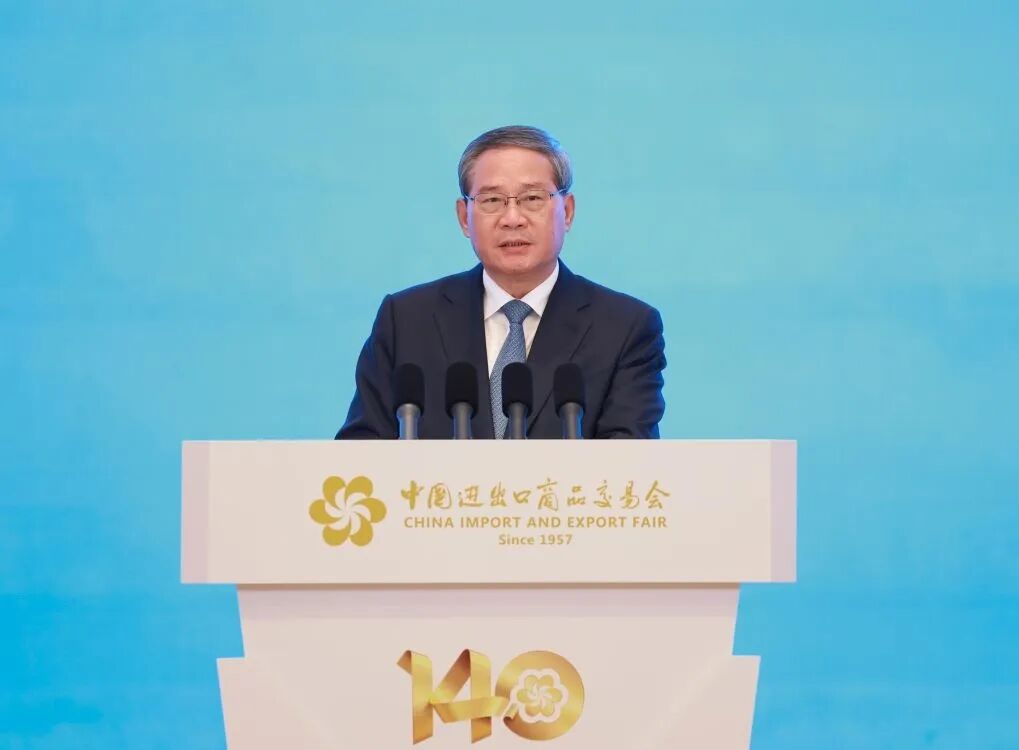
很高兴同大家相聚在美丽的花城广州,共同出席第140届中国进出口商品交易会。我谨代表中国政府,对各位的到来表示热烈欢迎!对大家长期以来为促进中外经贸合作和发展所作出的积极贡献表示衷心感谢!
新华网 2026-10-16 09:24:52
收藏资讯
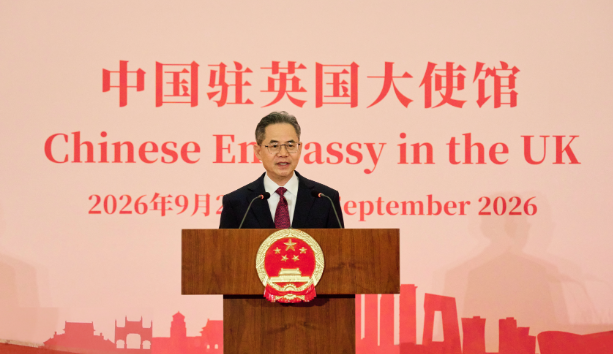
Tonight, we are gathered here to celebrate the 77th anniversary of the founding of the People’s Republic of China. On behalf of the Chinese Embassy in the UK, I would like to extend a warm welcome to all of you and my most sincere thanks for your long-sta
驻英使馆 2026-10-08 10:06:45
收藏资讯

It gives me great delight to join you at the "Future Resonance — ShanghaiEye Night" China-U.S. people-to-people exchange events, which are also part of the "Shanghai Let's Meet" city promotion initiative.
驻美使馆 2026-10-08 09:48:03
收藏资讯
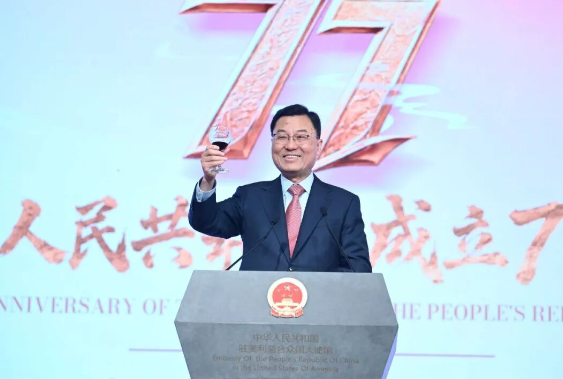
I am delighted to welcome you to our reception celebrating the 77th anniversary of the founding of the People’s Republic of China. Let me extend a warm welcome to you all and express my heartfelt thanks to friends from all walks of life who have long supp
驻美使馆 2026-10-08 09:46:22
收藏资讯

微信公众号

微信小程序
 登录
登录